Wednesday, 16 March 2022

Calculators in our classroom

 Back in the vanishing past, the calculator was a staple in the Year Six classroom as it was a required piece of equipment on one of the maths papers.  Now, of course, they are expressly forbidden and, as such, they can be persona non grata in many classrooms. 

However, we still jealously protect our class supply of calculators. For us, even with tests looming, we try hard to keep to our principle that we are merely one step on our children's educational journey, so we endeavour to send our children to secondary with the skill of being able to use a calculator.

The reasons for this are two-fold. Firstly, the use of a calculator is an important life skill. As we battle our children on developing their understanding of methods such as long division, we hear, echoing at the back of our heads, the message from a secondary colleague, "Nah - we use calculators for that." Therefore, we want the children to be ready for that step as they get into Year Seven. 

What happens when we get the calculators out for the first time? Distraction - pure and simple. To paraphrase an old song, "Those buttons are meant for pressing". The children start trying to find ridiculously hard calculations to 'beat' the calculator at. "Ha, look, I made mine get an E on it". Then one child remembers their older sibling showing them how to spell words on it. It is easy to see how this spreads round the classroom as suddenly the calculators start getting turned upside down:710, 0.7734 (if you are lucky). It is important to give them some time on this as it is only once you get through this phase, that it is time to teach the children how to use them. 

For us, the mantra we teach the children is, "You put rubbish in, you get rubbish out". We teach them the locations of the important buttons and what happens if you press they '=' button more than once. Then how important it is to do calculations more than once to check they get the same answers to identify 'user-error' and then we teach them that we are going to be using these tools for checking our work. 

Because this is what we use them for the majority of the time. When we are working on those fluency lessons in maths, it lets the children do their own live marking. They do a calculation using a written method and then they check the answer using a calculator. By doing this, the child knows immediately whether they need to look back at their work.  This is far more efficient than waiting for an adult or peer to check. It is easy for the teacher to see if they are still doing their written methods as, if it is all done on a calculator, there is no regrouping or other notations. 

We make sure that we model this in our lessons too. There are calculators available in interactive whiteboard software or online. It also lets us identify some of our 'deliberate' mistakes and model checking our work - honest. 
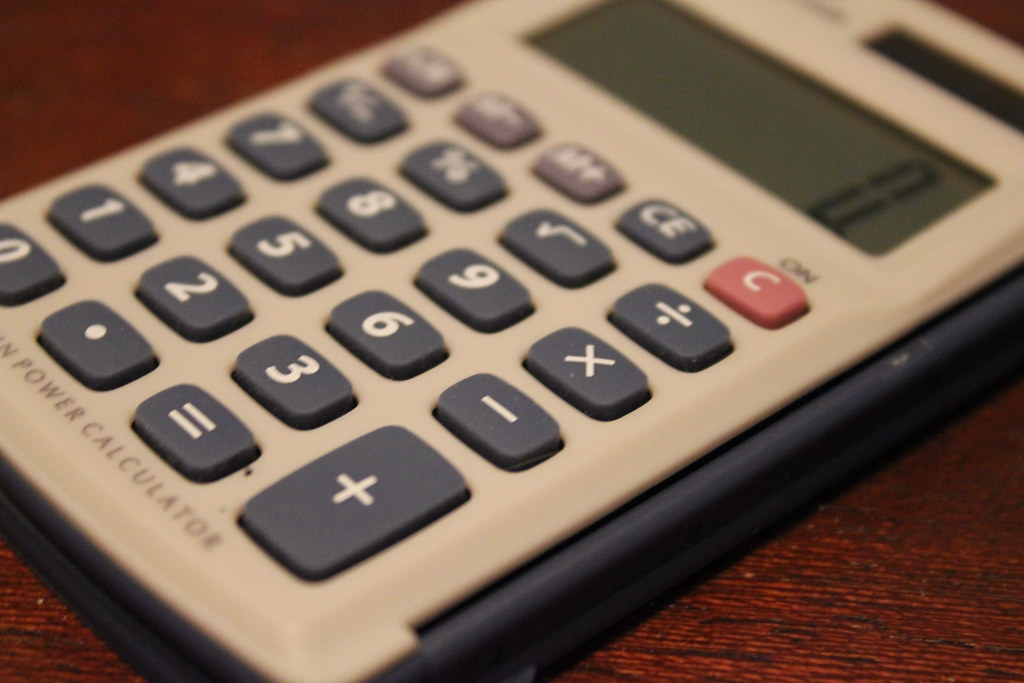

"Calculator" by jakeandlindsay is marked with CC BY 2.0.


Monday, 29 March 2021

Noggle in Class

During the recent spell of 'Remote Learning', we were copied into a Tweet about "Noggle". Now we'd used 'Boggle' many-a-time, but not 'Noggle'. 

So, we looked at the information and gave it a go in one of our Google Meet sessions. We used the same layout as Lydia shared as the grid must be formed in a way that has mathematically correct calculations within it. 


We shared the above example with our class; showing a correct calculation and one that is incorrect. 

Our template can be found here.

Feedback from the children was positive and it lead to some great discussions. Going forward, we'll use it again. We may also get children to form their own grids too.

But, not this... 


We hope that's useful.


Saturday, 20 February 2021

Bitmoji to Personalise Homophones

Yeah, yeah, we know! It's 2021 and Bitmojis for teachers appear to be everywhere! We quite like the little cartoon version of ourself that we can use to add to our lesson resources, particularly at this time of remote learning. We have seen this you're/your use of Bitmoji several times and have made our own. We've also begun looking at which other homophones and near homophones could be explained using a bit of Bitmoji. 

There are some examples below. 

We've placed our editable PowerPoint original here too if it's useful to anyone

Of course, we'd love to hear ideas for adding to our collection. 

If you want to make these your own, download the editable PowerPoint, the relevant Bitmoji images of yourself and edit the PowerPoint. 


Saturday, 16 January 2021

Bridge Behaviours

In September, we used this video with our Year Six class to discuss the behaviours of the characters and relate them to class. How could this have been better resolved? Does any character come out of it well? What can we learn from them?


https://vimeo.com/27299211  

Bridge from Ting on Vimeo.


Wednesday, 30 December 2020

Connect 4 with Multiples

Earlier this year, we came across a blog post by Joe Schwartz entitled, 'I Like This Game Because You Have to Think Hard.'

In his blog post, he gave students a blank 100/120 grid for them to fill in trying to get 4 in a row. We saw the benefits of this activity, but currently working in Upper Key Stage Two, our pupils are pretty proficient with numbers between 0 and 100. So, we adapted the idea to make it about times table facts. 

1. Give the children a blank 12 x 12 grid of squares between two.
2. Ensure each child has a different coloured pen/pencil.
3. Children fill in facts on the grid, taking it in turns and trying to get four in a row horizontally or vertically. 
4. Depending on competence, children could have a times table grid on hand to enable them to check each others facts.


Enjoy!

Saturday, 28 November 2020

'How To' Diagrams and Dual Coding

As we've previously written, we are trying to implement some of what we learned when reading about Dual Coding

Here are some of the posters/guides we've made and used in our Year Six classroom as visual guides for our children to use to support/scaffold their learning.

Days in Months of the Year (editable copy)


Long Division (editable copy)


Mixed Number & Improper Fraction Conversions (editable copy)


Co-ordinates (editable copy)


Ascending/Descending (pdf copy)


They've worked for us. They may be useful to you. See links for editable copies. 


Saturday, 31 October 2020

Pupil Stationery Toolkits

At the start of this school year, there was much discussion on social media and forums about methods of providing pupils with their own individual resources (for COVID19 reasons). 

A little later than we hoped to publish this post (we've been a little busy!), but we hope it's useful to someone...

So, here's what we do at our school, how long we've been doing it and why.

Back in 2017, we visited Woodside Primary Academy. As part of our visit, we picked up a number of best practice ideas. One of which was introducing Toolkits. There are a number of reasons we took these on:

- making children accountable for looking after the stationary the school has paid for

- giving them somewhere to store the equipment

- if they move in the classroom or go to work elsewhere, they just pick up the Toolkit and off they go

- we use everything in there quite regularly.


So, what's in there?

- whiteboard & whiteboard pen

- handwriting pen, green biro & HB pencil

- ruler, protractor and scissors

- sky, grass, mud letters and punctuation

- times table grid / 150 'square'

- A B C D voting card

- red, orange, green discs

- spelling cards for high frequency words

- sentence and vocabulary booklet

- grammar knowledge organiser


And, as you may be able to see, each Toolkit and each item in it is numbered according to the child's register number. When found, lost items can be returned to pupils. 


Saturday, 5 September 2020

Me, Me, Me

There are wide and ranging ways to 'get to know your new class'. This year, 2020, we wanted to find out about how the children had been since March, were feeling now, what home is like and added in a couple of 'silly' questions too. 


If it's useful, download a copy here.

Wednesday, 26 August 2020

The Five Uses of a Comma & Dual Coding

 Well, hello again! Our first post since February - it's been an interesting time (COVID19)!

Over August, we've been doing some reading.

Most recently, we have read 'Dual Coding With Teachers' and have used some of what we learned from that reading to adapt a resource we made earlier in 2020.

At a PiXL Event towards the end of 2019, we came across the revelation that 'commas have five uses in written English'.

So, combining both the information from PiXL and Oliver Caviglioli, we created this:

We're going to give it a go in our Year Six classrooms this coming year. We hope it'll improve the accuracy with which our children use commas when writing. 

Firstly, they need to know the 'five uses' and then link them to the images.

Next, we hope the codes can then be used to jog memories and used as teaching points.

We would be the last to claim to be English specialists, so if you have any feedback on our understanding of this element of English, please let us know.

An up-to-date copy of this resource, if it is changed, will always be here. (Typo corrected).


Saturday, 15 February 2020

Children Write the Knowledge Organiser

So, you're likely familiar with knowledge organisers and have written your own or downloaded some from online

Recently, we've undertaken a Canada study with our Year Six pupils that culminates in the writing of travel brochures. At the start of the work, we were looking for ways to make the children familiar with different parts of the country. In our Year Six, we have four classes; so each class took on the job of researching a different city and producing a knowledge organiser about it that the other classes could then use throughout the term. We linked the sections of the knowledge organiser to end of year geography knowledge expectations. 

In the past year, the good chaps at 'Mr A, Mr C and Mr D Present!' have given us access to their site*. (We'll have another post about them coming soon...) We used knowledge organisers off their site as the basis for this work. 

Firstly, their 'North America' knowledge organiser provided an example text:


Next, on the site there are editable knowledge organisers, so we downloaded one and edited it slightly:


And, the outcome for the city of St.John's, NL came out like this:


At the end, we have knowledge organisers about four Canadian cities, researched and produced by the children themselves. They can now be used by all the children to aid their work.

Studying a new topic? Get the class or classes in your year group to research and present their findings, as a knowledge organiser, for the children all to use at a later date...

*Our access to the 'Mr A, Mr C and Mr D Present PRIMARY SCHOOL · KS2 EDUCATION WEBSITE' was provided free of charge by Mr A, Mr C and Mr D Present. This was not with the purpose or expectation of this blog post being written. This is, as always, the view and opinion of two full-time class teachers/school leaders about something we use in the classroom. 

Saturday, 4 January 2020

Calendar for Child's Stickers

Not one for the teachers this time. This one's for the parents...

So, my eldest started Reception in September 2019. Since, she's brought home various stickers (due to her hard work, obviously). We've been looking for somewhere to keep them.

Here's what we've done:


Going forward, I have purchased a 2020 calendar and put it in my daughter's room. If she comes home with a sticker, we'll add it to that date on the calendar. Come 2021, we can reflect on her year... Hopefully, a calendar full of stickers!

Tuesday, 31 December 2019

Maths Question of the Decade

In about October time, someone twigged on that the decade was coming to an end. All we've heard since is 'decade', 'decade', decade'...

As it's my daughter's birthday, my mind shifted to a possible maths problem... (in a similar fashion to the Birthday Riddle): 

So, I'm 36 and I'm entering my 5th decade. 36 and 50 (ie 5 decades) are a fair distance apart. The children currently in Years Four, Three, Two... are only just entering their second decade.
So, here's the question:

How long would someone have to be alive to enter their second decade at the earliest opportunity?

How long would someone have to be alive to enter their second decade at the latest opportunity?

How long would someone have to be alive to enter their fifth decade at the earliest opportunity?

How long would someone have to be alive to enter their fifth decade at the latest opportunity?

How long would someone have to be alive to enter their tenth decade at the earliest opportunity?

How long would someone have to be alive to enter their tenth decade at the latest opportunity?

Or, any other similar questions that may come to mind...

What's the longest a decade can be? What's the shortest a decade can be? (NB: Leap Years ;-))

Friday, 29 November 2019

English Figurative Language Crossed the Road

Recently, I came across this wonderful article pictured below:


Unfortunately, I've lost the source (if found, this will be updated).

We shared it with our Year Six children...


We shared it as part of our current poetry work. We asked the children to write sentences in the style of 'Why did the chicken cross the road?", but replace the chicken with a poetic device and then make the rest of the sentence an example of that figurative language. Here's some of what they came up with...


The children found this an engaging and productive activity.

Wednesday, 23 October 2019

The Sunscreen Song - Thought for the Week

As a 16 year old, I heard the "The Sunscreen Song" on the radio. It struck me as being slightly odd, different and a bit amusing. A week later, my mother purchased a copy on CD. Me mam, buying a song in the charts. I know! 
Since, 20 years have passed. It's popped up now and again on the radio and I've also stuck it on myself. As I've aged, the song has meant more and more to me. It is a beautiful series of words and sentences. And, why my mother purchased a copy now makes more sense! 


Here's what I'm up to with it:


In my classroom, I have created a 'This Week's Thought' display and I have split the song into some of it's lines of 'advice'. Each week, I put up a different quote from the song. 

I have not told my class where they are coming from, nor have I pointed out the display. I'm going to keep putting them up and then, towards the end of the year, review what's been up there, play them the song and get them to read the lyrics. We can then discuss.

Also, we will try to write some lines of our own in a similar style.


Monday, 30 September 2019

Cutting, Sticking and Straight Lines

At the start of the year, we like to get some basics sorted. 


To get those cutting, sticking and using a ruler skills up to speed, we use the following two tasks:

Cutting and sticking

We found a Mincraft sword for the children to cut out and stick together. The more accurately they cut and stick, the better the outcome. The source of this resource can be found here

Drawing straight lines

For the ruler skills, we discovered 'What to draw and how to draw it', Lutz (c1913). We used the book to create a resource for class. The outcomes were great, and a skill practised.

Wednesday, 14 August 2019

Taskmaster - What did you see?

In the most recent series of Taskmaster, the following task was given to the contestants.

They were shown a display of items for a short period of time (they were allowed to walk past it once):

Then, and only then, they were asked to recreate what they had seen using the resources in front of them. These images show what they came up with.


So, in class, set up a scene. Allow the children to walk past it. Ask them to draw what they had seen. Get them to do it with resources. Get them to describe it to someone else for them to draw.

The main thing is, with this task, the pupils walk past the scene without knowing what's coming next in the task.

Tuesday, 2 July 2019

Short Stories with Oliver Jeffers

On a recent visit to the local library, I picked up 'An Alphabet of Stories' by Oliver Jeffers. I picked it up because I'm a bit of a fan of Jeffers' work and had not see this book before. As can be seen in some of our previous posts, I quite like a short story too!


In this book, Jeffers creates a short story linked to each letter of the alphabet. Some stories even cross-reference each other.

The stories are fantastic: build up, dilemma and conclusion all in a few sentences. Like the 'A' example above, all the stories begin on one page and have the punchline or resolution on the next page.


In my current Year Six class, we have 28 pupils. With 26 letters of the alphabet, I decided we'd all write a story (with some letters being repeated if no one was absent). Two pupils were absent. Result! 

Below in my attempt for 'P':


Give it a go. Let us know how you get on...

Friday, 14 June 2019

Desk Calendar Problem

So, I saw this on a colleague's desk. It got me thinking: "These are six-sided cubes. So, how can twelve digits split as a six and a six represent all thirty-one days of a month?"


It's a problem that makes use of trial and error, make a model and test and thinking logically. I made a sheet to introduce the problem:


The sheet, with differentiated support and my answer can be found here.

I wonder how many combinations of answer there are...

Thursday, 30 May 2019

Beach Ball Throw - Taskmaster

For the past four years, we've used the 'Backwards Video Task' as a team building task at the start of each year. It gets children working together and produces some imaginative and impressive outcomes


In the most recent series of Taskmaster, the contestants were given another video task I can see working well in the classroom. The contestants were given a beach ball and asked to film themselves in one location throwing the ball out of shot and then later film them self catching the ball in a new location. The winner of the task was the person who 'threw' the ball over the largest total distance. In school, I'd be looking for the group to ensure consistency by linking the throws and filming to make each throw and catch look authentic. 


Going to give it a go in September. We'll see what the children come up with! There's a planning sheet here that may be useful.

Tuesday, 30 April 2019

Disney in French

I have two toddler daughters. In recent years, I've become very familiar with the plots, characters and songs of 'Beauty and the Beast' and 'Frozen' in particular. One day last week, one daughter wanted to dance to 'Build a Snowman'. So, I searched for it on my phone. For some reason, the French version came up. It struck me that this could be another way to access a language in a classroom. A hook, a stater, game or just for a bit of fun...

La Reine des Neiges - Je voudrais un bonhomme de neige