Showing posts with label maths. Show all posts

Wednesday, 16 March 2022

Calculators in our classroom

 Back in the vanishing past, the calculator was a staple in the Year Six classroom as it was a required piece of equipment on one of the maths papers.  Now, of course, they are expressly forbidden and, as such, they can be persona non grata in many classrooms. 

However, we still jealously protect our class supply of calculators. For us, even with tests looming, we try hard to keep to our principle that we are merely one step on our children's educational journey, so we endeavour to send our children to secondary with the skill of being able to use a calculator.

The reasons for this are two-fold. Firstly, the use of a calculator is an important life skill. As we battle our children on developing their understanding of methods such as long division, we hear, echoing at the back of our heads, the message from a secondary colleague, "Nah - we use calculators for that." Therefore, we want the children to be ready for that step as they get into Year Seven. 

What happens when we get the calculators out for the first time? Distraction - pure and simple. To paraphrase an old song, "Those buttons are meant for pressing". The children start trying to find ridiculously hard calculations to 'beat' the calculator at. "Ha, look, I made mine get an E on it". Then one child remembers their older sibling showing them how to spell words on it. It is easy to see how this spreads round the classroom as suddenly the calculators start getting turned upside down:710, 0.7734 (if you are lucky). It is important to give them some time on this as it is only once you get through this phase, that it is time to teach the children how to use them. 

For us, the mantra we teach the children is, "You put rubbish in, you get rubbish out". We teach them the locations of the important buttons and what happens if you press they '=' button more than once. Then how important it is to do calculations more than once to check they get the same answers to identify 'user-error' and then we teach them that we are going to be using these tools for checking our work. 

Because this is what we use them for the majority of the time. When we are working on those fluency lessons in maths, it lets the children do their own live marking. They do a calculation using a written method and then they check the answer using a calculator. By doing this, the child knows immediately whether they need to look back at their work.  This is far more efficient than waiting for an adult or peer to check. It is easy for the teacher to see if they are still doing their written methods as, if it is all done on a calculator, there is no regrouping or other notations. 

We make sure that we model this in our lessons too. There are calculators available in interactive whiteboard software or online. It also lets us identify some of our 'deliberate' mistakes and model checking our work - honest. 
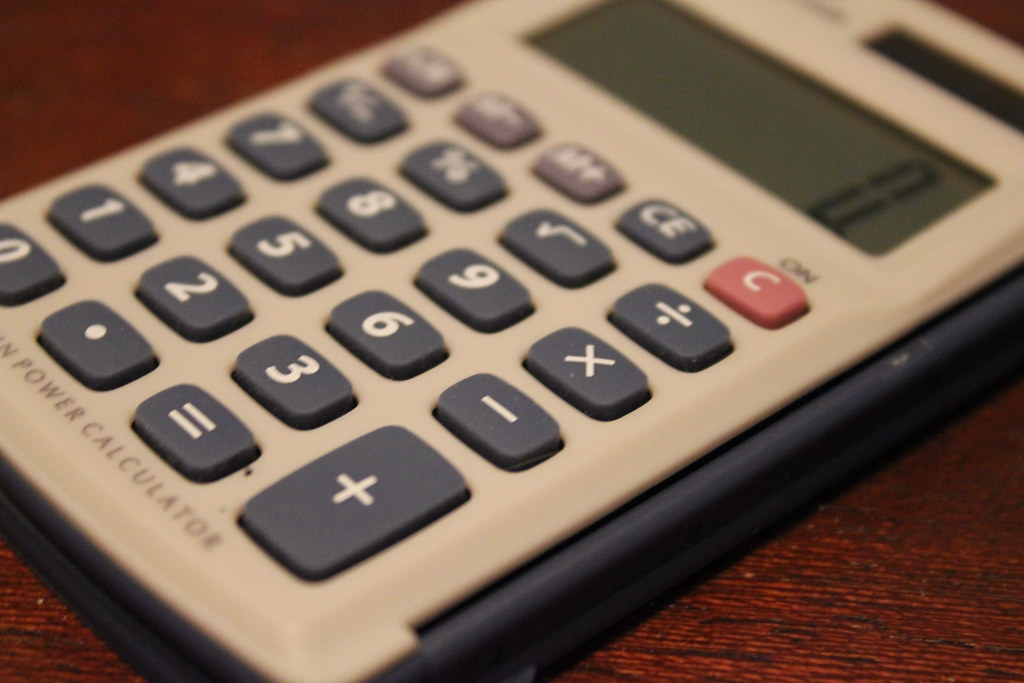

"Calculator" by jakeandlindsay is marked with CC BY 2.0.


Monday, 29 March 2021

Noggle in Class

During the recent spell of 'Remote Learning', we were copied into a Tweet about "Noggle". Now we'd used 'Boggle' many-a-time, but not 'Noggle'. 

So, we looked at the information and gave it a go in one of our Google Meet sessions. We used the same layout as Lydia shared as the grid must be formed in a way that has mathematically correct calculations within it. 


We shared the above example with our class; showing a correct calculation and one that is incorrect. 

Our template can be found here.

Feedback from the children was positive and it lead to some great discussions. Going forward, we'll use it again. We may also get children to form their own grids too.

But, not this... 


We hope that's useful.


Wednesday, 30 December 2020

Connect 4 with Multiples

Earlier this year, we came across a blog post by Joe Schwartz entitled, 'I Like This Game Because You Have to Think Hard.'

In his blog post, he gave students a blank 100/120 grid for them to fill in trying to get 4 in a row. We saw the benefits of this activity, but currently working in Upper Key Stage Two, our pupils are pretty proficient with numbers between 0 and 100. So, we adapted the idea to make it about times table facts. 

1. Give the children a blank 12 x 12 grid of squares between two.
2. Ensure each child has a different coloured pen/pencil.
3. Children fill in facts on the grid, taking it in turns and trying to get four in a row horizontally or vertically. 
4. Depending on competence, children could have a times table grid on hand to enable them to check each others facts.


Enjoy!

Saturday, 28 November 2020

'How To' Diagrams and Dual Coding

As we've previously written, we are trying to implement some of what we learned when reading about Dual Coding

Here are some of the posters/guides we've made and used in our Year Six classroom as visual guides for our children to use to support/scaffold their learning.

Days in Months of the Year (editable copy)


Long Division (editable copy)


Mixed Number & Improper Fraction Conversions (editable copy)


Co-ordinates (editable copy)


Ascending/Descending (pdf copy)


They've worked for us. They may be useful to you. See links for editable copies. 


Tuesday, 31 December 2019

Maths Question of the Decade

In about October time, someone twigged on that the decade was coming to an end. All we've heard since is 'decade', 'decade', decade'...

As it's my daughter's birthday, my mind shifted to a possible maths problem... (in a similar fashion to the Birthday Riddle): 

So, I'm 36 and I'm entering my 5th decade. 36 and 50 (ie 5 decades) are a fair distance apart. The children currently in Years Four, Three, Two... are only just entering their second decade.
So, here's the question:

How long would someone have to be alive to enter their second decade at the earliest opportunity?

How long would someone have to be alive to enter their second decade at the latest opportunity?

How long would someone have to be alive to enter their fifth decade at the earliest opportunity?

How long would someone have to be alive to enter their fifth decade at the latest opportunity?

How long would someone have to be alive to enter their tenth decade at the earliest opportunity?

How long would someone have to be alive to enter their tenth decade at the latest opportunity?

Or, any other similar questions that may come to mind...

What's the longest a decade can be? What's the shortest a decade can be? (NB: Leap Years ;-))

Friday, 14 June 2019

Desk Calendar Problem

So, I saw this on a colleague's desk. It got me thinking: "These are six-sided cubes. So, how can twelve digits split as a six and a six represent all thirty-one days of a month?"


It's a problem that makes use of trial and error, make a model and test and thinking logically. I made a sheet to introduce the problem:


The sheet, with differentiated support and my answer can be found here.

I wonder how many combinations of answer there are...

Saturday, 2 March 2019

Revision Badges

We spotted a Tweet...
It got us thinking. As we're both now teaching in Year Six (together - I know!), could we do something similar for our learners?

So, we set to work. We looked at some Question Level Analysis, asked pupils, teachers and TAs and then created a bank of items the current Year Six could do with some reminders of.


A bit of work in PowerPoint, adding the information to circular templates, before printing and putting them through the badge maker, and we'd got some badges!


We've created 40 of them. The idea being that we dip into the pot of badges each day between now and the second week in May and wear the badges for the pupils to see.


We've been wearing them for four days so far. The pupils ask adults what their badge says and ask questions about them. We currently have no proof if they are working. But, the signs look promising and they can't have a negative impact! 


Our badge machine is a 55mm badge maker and therefore our templates are for 55mm badges. If you think we've missed a fact or facts, please let us know. And, of course, please help yourself to a copy of our templates.

Monday, 18 February 2019

Place Value and Receipts

As it's the Half Term break, my family and I took in a spot of lunch out earlier today. We were in a well known pub chain that have an app that allows orders to be made from the table...


A receipt we received, contained various numbers. All the numbers need to be read in Key Stage Two. Grab a load of receipts. Can the children in Year Four/Five read all the numbers on them?


Thursday, 31 January 2019

Vocabulary of Testing

Here's an idea from a colleague...

We do tests (not the official ones) to find out what children do/don't know, to give them practice of what a test is like and to teach test technique.

Good practice is to review the test with the pupils. What did they get right? What did they get wrong? Why?


Something we've recently learned is to ask the children for 'the words they did not understand'. Then, spend some time defining these words and then display them for all to see. Can't do the test if you don't understand the vocabulary...

Monday, 3 December 2018

Advent Maths

So, this year (2018), 1st December was on a Saturday. Doors opened on Advent calendars all around the land. Go to church on 2nd December and they're lighting their candle and saying that it was the first day of Advent.

So,

There are four Sundays in Advent. The four Sundays leading up to Christmas Day.


Thursday, 29 November 2018

#Taskmaster - Estimate of Perimeter in...

Calculating perimeter can be a bit, er, repetitive.

Estimating can be a bit, er, repetitive.


So, you've been studying perimeter. You've measured, you've done 2(A+B), the trundle wheels have been out, you've costed a new fence for the school field and more...

You've tried and tried to convince your class of the virtues of estimating, but they think you're just balmy.

Well, we like this task!

In the task the contestants have to estimate the perimeter of the caravan in baked beans. So, perimeter of the field in beans, the perimeter of the school hall in paper clips, the perimeter of a maths book in dice and so on...

Same learning, same objectives, but in a different way. Mix things up and get 'em thinking! Let us know how y'all get on...

Thursday, 25 October 2018

Penalty Angles

Going back a couple of months, we came across 'The science behind Eden Hazard's FA Cup winning penalty' on Facebook. We watched it and, of course, it gave us an idea for a lesson...


It was the video's thumbnail (above) that caused our minds to begin thinking 'school' and 'maths'.

Like you, we imagine, one of our biggest tasks is the 'how do we get them engaged?' question. Football is usually quite successful!

Here's a photo of Messi taking a penalty. Similar to us, you could search the internet, or screen capture penalties being taken (remember to check copyright laws!). 

If you attend football matches, you could take your own photos:

Perhaps, even better. Get the children taking and photographing their own penalties. 

28/10/18 Update: See here for numerous examples!

Finally, whichever you choose, give the children example shots of the penalties being taken. Get them to put on the '0 degree line' and measure the angle from there. If using your own photos, is there an angle that guarantees scoring?

Got some examples? Do share them...

Sunday, 10 June 2018

Sporting Number Bonds

Last month, I was at a football match. The team I support were winning, for a change. As a result, I was clock watching for most of the second half. As time went on, I realised that my Number Bonds to 90 are pretty good.

Too often in school, we focus on Number Bonds to 10 and to 100. This is all good and well, but it's not enough. The children need to know their Number Bonds WITHIN 100. This then aids their addition and subtraction greatly. They need to know all 288 X and ÷ facts, and in the same way, they need to know these sum/difference facts within 100. For example, 5 and what make 13? 15 add 7 is? 23 added to 19? 44 subtract 17?

Here's an idea. 
Like I was, use the scenario of a sporting event to help:
Football: Number Bonds to 45/90
Basketball: Four 12 minute quarters
Cricket: Number Bonds to 6 (overs), 40/45/50 (game length)
Netball: 60 minutes, divided into 15 minute quarters
Ice Hockey: 60 minutes, divided into 20 minute thirds
Rugby Union: Number bonds to 40/80 

Saturday, 10 March 2018

Part Part Whole, Bar Model & Perimeter

Earlier this year, we were calculating perimeter of compound shapes with some missing measurements. Some children were struggling to work out which measurements were missing. 

So, we took to using the bar model to offer some support.


1. Count the sides of the shape
2. Colour horizontal sides one colour and vertical sides another colour
3. Identify which sides have an unknown length
4. Use 'Part Part Whole' bar model (one for horizontal and one for vertical) to help find missing lengths
4a. The bar models can also be colour coded the same as the sides
5. Check the number of lengths found matches number of sides and looks sensible 
6. Add them up...


It worked well for us. Of course, as always with the bar model, it will help work towards an answer, but not give an answer. 


Sunday, 21 January 2018

The Piano Key Problem

I was watching a program about how a piano works earlier with my daughter. One of the facts was about the number of white and black keys. Wonder if children can use their reasoning skills (drawing a picture, making a model or looking for a pattern) to solve this:

___________________________________________________________________


On an 88 key piano, there are 52 white keys. How many are black? 
The lowest key (first note) is an A. The last note is C.How many A, B, C, D, E, F & G notes are there?
___________________________________________________________________


Here's the answer with a picture from Piano-Keyboard-Guide.com:


Saturday, 20 January 2018

Supermarket Maths

It's a quick one...


Supermarkets are full of maths, well everywhere is. You're probably walking around with your phone in your pocket. Snap some maths starters or additions to your lessons. they'll be a real life link. We've started here.

Sunday, 19 November 2017

Maths Reasoning - Was Peter right? What did he mean?

On Thursday 16th November, Peter Kay was on the radio with Chris Evans. Here's a conversation they had. Available for 30 days (listen at 41:15)... 

Peter Kay (PK): You're lying in bed now thinking, I'll get up after this song. Round it up... What is it now? 7 what?
Chris Evans (CE): 7:12.
PK: Wait until 7:15.
CE: Yes, yes...
PK: Don't get up on an odd number.
CE: Go crazy.
PK: Wait until 7:15. When it's 7:17, wait until 20 past. 
CE: Is that what you do?
PK: You gotta round it up. You can't just get up mid numbers. 

So, Peter said to not get up at 07:12 and wait until 07:15 as he doesn't like to get up on an odd number. What's wrong? What was he intending to say? How can that be re-worded, but more mathematically accurate?


Monday, 18 September 2017

Large Numbers

In maths, we're required to order, round, calculate and so on with numbers up to millions. Where can we find such numbers?


House prices
Wages
Sporting event attendances
Phone numbers
Social media follower numbers
Car mileage
Geographic values (mountain heights, distances, water depth)

[In coming days/weeks, we'll update above with some examples...]

Got any other ideas?

Sunday, 3 September 2017

Flightradar & The Skies Above

Over the summer, I've spent some time sat outside, particularly in the evening. With the clear skies for viewing and no cloud to mask sounds, I've notice how many planes and how frequently they pass over my home. I'm located in the home counties, within easy reach of many of our major airports - its a busy air space.

After watching plane after plane passing over, I started to wonder where they'd come from and where they were going to. Step forward the Flightradar24 app. I could now find out about each plane.

Then an idea came to me:

At school, download the app or use the website. Go out onto the playground. Look for a plane of two. Go and research the origin location, the destination, the flight (frequency/duration etc), the airline, the aircraft and more...

After looking at the Flightradar24 site, I came up with another idea too. Zoom the map out. Simple question: What do you notice?


That's just for starters. It intrigues me the more I look at it. Maybe it could be a writing prompt too? I'm sure there'll be a maths link. Have you seen the map shows night/day? Comment below if you come up with any further uses...

Friday, 14 July 2017

Times Table (Ball Pit) Relay


After seeing something on Facebook, I did a times table relay with my class. On Twitter, Mr Dyson saw it and liked it. He challenged one of his teachers to 'do better'. That set me thinking!
And, today this is what we did...


I filled two recycle bins with ball pit balls;

Outside, I stood the sticks against a wall;


I put the Velcro numbers for a times table in each of the ball pits;

I then got the class, in turn, to run and collect a number, work out the times table and add it in the correct place on the stick. 


It. Was. Great!
