Showing posts with label writing. Show all posts

Saturday, 20 February 2021

Bitmoji to Personalise Homophones

Yeah, yeah, we know! It's 2021 and Bitmojis for teachers appear to be everywhere! We quite like the little cartoon version of ourself that we can use to add to our lesson resources, particularly at this time of remote learning. We have seen this you're/your use of Bitmoji several times and have made our own. We've also begun looking at which other homophones and near homophones could be explained using a bit of Bitmoji. 

There are some examples below. 

We've placed our editable PowerPoint original here too if it's useful to anyone

Of course, we'd love to hear ideas for adding to our collection. 

If you want to make these your own, download the editable PowerPoint, the relevant Bitmoji images of yourself and edit the PowerPoint. 


Wednesday, 26 August 2020

The Five Uses of a Comma & Dual Coding

 Well, hello again! Our first post since February - it's been an interesting time (COVID19)!

Over August, we've been doing some reading.

Most recently, we have read 'Dual Coding With Teachers' and have used some of what we learned from that reading to adapt a resource we made earlier in 2020.

At a PiXL Event towards the end of 2019, we came across the revelation that 'commas have five uses in written English'.

So, combining both the information from PiXL and Oliver Caviglioli, we created this:

We're going to give it a go in our Year Six classrooms this coming year. We hope it'll improve the accuracy with which our children use commas when writing. 

Firstly, they need to know the 'five uses' and then link them to the images.

Next, we hope the codes can then be used to jog memories and used as teaching points.

We would be the last to claim to be English specialists, so if you have any feedback on our understanding of this element of English, please let us know.

An up-to-date copy of this resource, if it is changed, will always be here. (Typo corrected).


Friday, 29 November 2019

English Figurative Language Crossed the Road

Recently, I came across this wonderful article pictured below:


Unfortunately, I've lost the source (if found, this will be updated).

We shared it with our Year Six children...


We shared it as part of our current poetry work. We asked the children to write sentences in the style of 'Why did the chicken cross the road?", but replace the chicken with a poetic device and then make the rest of the sentence an example of that figurative language. Here's some of what they came up with...


The children found this an engaging and productive activity.

Wednesday, 23 October 2019

The Sunscreen Song - Thought for the Week

As a 16 year old, I heard the "The Sunscreen Song" on the radio. It struck me as being slightly odd, different and a bit amusing. A week later, my mother purchased a copy on CD. Me mam, buying a song in the charts. I know! 
Since, 20 years have passed. It's popped up now and again on the radio and I've also stuck it on myself. As I've aged, the song has meant more and more to me. It is a beautiful series of words and sentences. And, why my mother purchased a copy now makes more sense! 


Here's what I'm up to with it:


In my classroom, I have created a 'This Week's Thought' display and I have split the song into some of it's lines of 'advice'. Each week, I put up a different quote from the song. 

I have not told my class where they are coming from, nor have I pointed out the display. I'm going to keep putting them up and then, towards the end of the year, review what's been up there, play them the song and get them to read the lyrics. We can then discuss.

Also, we will try to write some lines of our own in a similar style.


Tuesday, 2 July 2019

Short Stories with Oliver Jeffers

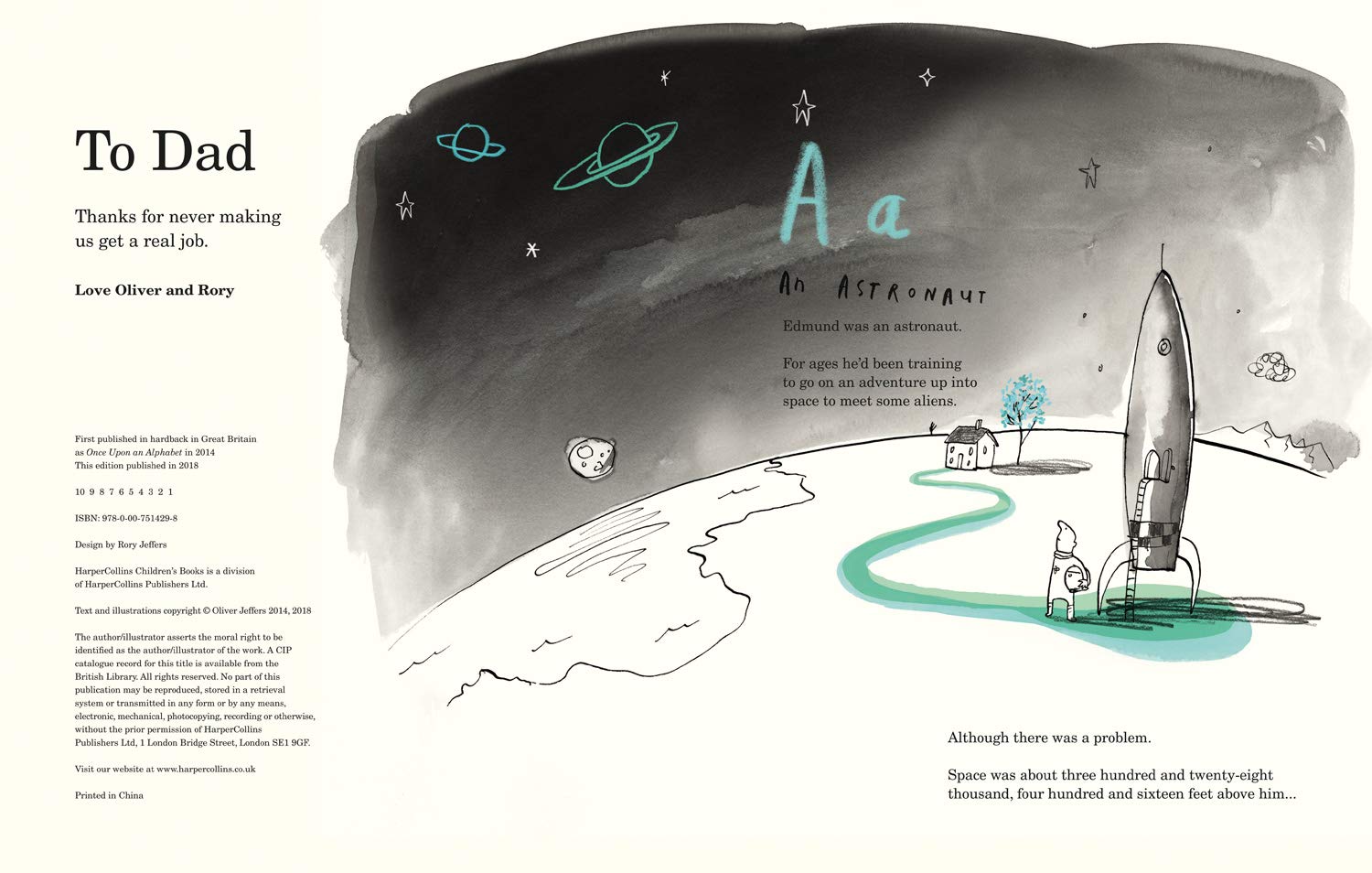
On a recent visit to the local library, I picked up 'An Alphabet of Stories' by Oliver Jeffers. I picked it up because I'm a bit of a fan of Jeffers' work and had not see this book before. As can be seen in some of our previous posts, I quite like a short story too!


In this book, Jeffers creates a short story linked to each letter of the alphabet. Some stories even cross-reference each other.

The stories are fantastic: build up, dilemma and conclusion all in a few sentences. Like the 'A' example above, all the stories begin on one page and have the punchline or resolution on the next page.


In my current Year Six class, we have 28 pupils. With 26 letters of the alphabet, I decided we'd all write a story (with some letters being repeated if no one was absent). Two pupils were absent. Result! 

Below in my attempt for 'P':


Give it a go. Let us know how you get on...

Friday, 15 March 2019

Bonza Vocabulary

A few weeks ago, I came across an app. Bonza is its name. Cheers Alex for the Tweet about it. So, it's a word game. The parts of the puzzle need to be put back together to form a crossword. Before the puzzle comes up, there is a hint as to what the puzzle's topic may be.


Gave the game a go. Enjoyed it. Thought about uses in school. After investigating the app a little, found it is rated 12+ due to some of the vocabulary and subject content within the app. However, here are some ideas for using Bonza and/or Bonza-style puzzles in class...


1. Create a puzzle and then project to a screen from your own device. Complete the puzzle together. We've blogged about this approach in the past.

2. Create a puzzle and print it out to be cut and stuck, or the answers written out.

3. Create a puzzle and the. Recreate it in Word, PowerPoint or similar.


What could the puzzles be about? A spelling rule, verb tenses, topic-based vocabulary, revision and, well anything that involves words really.

Another tool to add a bit of variety to a classroom and learning. Age rating of the app just a tad irritating. NB, puzzles can only be completed in the app and not through a browser either...


Here's one I made to go with our Year Five's rivers topic (also pictured above).

Tuesday, 26 June 2018

Colloquial Imperatives

Want to help your children find, identify and remember where imperative verbs are used in instructional writing? 

Try making the imperatives a little less formal!


Thursday, 3 May 2018

Magical Hatching Writing

Recently, my daughters purchased some 'Magical Hatching Unicorns' and in school we used some hatching dinosaurs as a writing prompt.
With my daughters, toddlers, they knew that there were unicorns in the eggs and that they would hatch, but not how or why.
With the children at school, they knew the item was a 'toy' and that it would hatch, but not what was going to come out of them.
For those of you who have not come across these, it's a plastic egg, with an item inside and when it is placed in water for a couple of days, the egg hatches and the animal grows in the water.
To add to the excitement of the animal hatching, we used so augmented reality apps to make a dragon fly around the classroom.
The anticipation of what would come out of the egg, seeing it slowly appear and all the talk that went with it, created excitement and intrigue that lead to enjoyment of writing. 
What will you do with them?

Sunday, 14 January 2018

Team 100WC – Comment on Writing

One of the biggest impacts on writing standards in our classrooms has been the use of the 100 Word Challenge and similar writing opportunities. Blogging and 'little and often' writing tasks really help children improve as writers.
 

A huge part of this is children receiving comments about their work. Writing in a book and me marking it and then that book sitting on a shelf is ok, but only ok. What's much better is when someone from some far-flung part of the globe comes along and says what they like about a child's writing and what could be improved. Being part of a 'Hub' and receiving peer comments is part of this, but adults in 'Team 100WC' are a massive help and have a huge impact on children's writing. 

The 100WC is free to use, is offered by a retired head teacher and relies on volunteers to operate. 

So...
Think you have 20 minutes spare a week to read some fantastic writing and leave some comments? Do you know someone else who might? You don't even have to be a teacher, or be any good at writing - just need to be an audience! I do it each week. It is enjoyable. I read work from around the globe. I read work that's amazing. I read work that's no-so amazing. But, for each one, I say what I like and offer some advice. I hope I'm making a difference. 5 pieces of work a week - it's not much. When children in my own class receive comments, they really, really appreciate it!

If you can, take a look here!

Saturday, 13 January 2018

Dialogue and Breaking the Fourth Wall

If you're looking for a way to teach punctuating dialogue, it's hard to beat Lee's "Teaching Direct Speech Punctuation using the iPhone text messaging!", which he published nearly five (FIVE) years ago.

Recently, I've been reading books in the following series to both my own children and my class. As someone reading a book out loud, the thing I like it is the way the books talk to their audience and invite them into the narrative.


The reason they're appearing in this post is that they're written as direct speech, with the speech in speech bubbles.

Ideas:
- children look at page or pages in a book and convert the speech bubble(s) into written, punctuated dialogue.

- children create a dialogue between themselves and the book. The books get the reader to think or intimate a response. These could be written down.

- children could write the narrative of the story. Still writing dialogue, but adding actions and descriptions too.

Just a few ideas to get you started...

Sunday, 31 December 2017

Lightning Writing

Just like anything else, one of the key elements of becoming a better writer is actually doing it. One of the strategies we have used to increase the frequency of our writing is something we have called 'Lightning Writing'. This takes place most mornings during registration and involves writing for a short amount of time (often only 15 minutes). In general, the writing tasks fall into the following areas:
  • three sentence stories - write a story in three sentences. Horror works well, but it can also be a good opportunity for teaching rhetorical questions as a story ending.
  • improving supplied sentences - give them basic sentences and get pupils to improve them.
  • sentence combining - a variation on the above. However, with a focus on joining simple sentences together.
  • teaching sentence types in a context - we use Alan Peat 'Exciting Sentences'. This is a great opportunity to teach some of the different styles.
  • descriptive passages - writing a description based on a stimulus such as those provided by the brilliant 'Pobble' website. Although we have used our own such as this one.
      
    There are, of course,  lots of other options. We wrote tweets, emails to the prime minister and even letters of complaint. 
Once the idea is set up, the task is displayed on the board and children were able to get on with having a go independently. 
This activity does require a bit of extra marking, but, by adding in a peer-assessment day, editing day and feedback day, one task can become an extremely constructive piece of writing over a whole week. Often these tasks are so good they can be published (including sending them to the people they are writing to). Another advantage is that they come so frequently you can get them to write what interests you and the children as well as those pieces on the curriculum. A favourite of ours was the writing of haiku, which ended up in our best work books at the end of the year.

Tuesday, 14 November 2017

Preposition in the Classroom

Heard of Elf on a shelf, right? So, here's something inspired by it...


Print and laminate the word 'preposition'. Each morning, put it on, under, behind, inside something and the class need to find it, and then describe where the word is, using a preposition...


On the window, under the chair, next to the board...

Friday, 28 July 2017

Edit Your Friend's Facebook Posts

Some of my friends on Facebook and contacts on Twitter write beautifully and accurately, others (like me) have the off (:-)) typo here and there, while others just write with errors all over the place (your/you're - grrr).


This is a post by a friend of mine on his Facebook page. I took a screen capture and asked my class to correct it. We did it as an Exit Ticket activity.

So, spot an awful social media update, copy it, anonymise it, and give it to your class... 

Thursday, 15 June 2017

How it Feels to be 40

Saw this Tweet,
Asked some Year Five children for their responses...


This sort of question gives an insight into their thinking and raises interesting talking points. I'll be doing it more often.

Tuesday, 13 June 2017

Flags & Emojis

So, last month I saw the below Facebook post from a friend.


It got me thinking; do the children know the answers?

So, here's what we did:

- I gave them tablets (iPad);


- Got them to open a document and, from the Emoji keyboard, insert a flag that contained a Union Flag.

- Next, find out where the flag is the flag of, why it contains a Union Flag and some of the history of the country*. They used the internet, books and each other for help.

-> Of course, this could be used for any flag in the Emoji keyboard, "Whose is it?" "Why that 'pattern'?" "Why those colours?" and so on... 

Here's some of that they produced:


*Not all of them are countries!

Monday, 15 May 2017

Here's How That COULD Be Spelt

The Phonics Screening Check is undertaken in Key Stage 1 and is supposed to indicate a child's understanding of phonics. 
As part of the check, children are asked to read words. Some real; others made up (pseudo):


How about turning that on its head when studying phonics, reading, writing and spelling across primary (and maybe even secondary) education?: 

When studying a spelling, ask the children for examples of how it could be spelt. There are 44 phonemes. How can they be rearranged and swapped to create the same sound, but a different spelling: fone, phone, phowne, fowne...

Which one looks right, do all the suggestions look likely, how could this be useful for spelling new words?

Tuesday, 2 May 2017

Letter and/or Number Reversal Search

Some children struggle to write some letters and numbers the correct way around. An alternative to getting them to write out lots of the letter or number the right way can be to find the letter, in its correct orientation, on a page of correct and 'incorrect' letters.


The above example is for finding b and d. A copy of this can be found here.

Tuesday, 21 March 2017

Twitter for Parts of Speech

Find a Tweet or two (with no swearing or major punctuation/grammar errors*) and ask the children to identify the parts of speech contained in it. They'll be short texts as they've got to be within 140 characters.

  In this example, I found a Tweet with the word 'stamp' in it:
Here's another...

* It's a challenge!  

You could even write your own, or get the children to

Friday, 23 December 2016

Non-Chronological Report Writing

As previously written about, we're always looking for ways to enthuse learners, engage them in their learning journey and provide them with an audience. 

In the past we've tried writing non-chronological reports about the following with children: instruments (it was a link to making instruments in design and technology, but the children's research about what to write about let them down), Anglo-Saxons (again subject knowledge let them down despite it being a cross curricular link), David Beckham (subject knowledge was ok, but some children got events mixed up) and other relevant subjects.

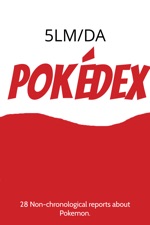
In the autumn term 2016, many of the children in our school have been captivated by Pokemon and Pokemon Go. As a result, we decided this would be the topic for our forthcoming non-chronological writing. What? a non-fiction text type being written about a fictional topic? can that be done? looks like it: "Harry Potter - The Character Vault" & "The Pokémon Encyclopedia, Official" for a start. 

Our hopes: the majority of children who are often turned off by writing would be engaged by this, those who already enjoy writing would still do so and that the few left 'in the middle' could be encouraged by the others. In addition, the children would be writing a report about a 'new' Pokemon, a Pokemon they would invent. Subject knowledge needed? No, because they're creating the creature. Can what they write be wrong? No, it's their creature. They can focus on report style and layout. What if anyone really doesn't want to write about a Pokemon? They can write about a mythical creature (shhh, that's what a Pokemon is!)

How did it go? Over the three weeks, we designed the area in which our Pokemon would live, learned about how Pokemon my act and interact and what attributes they may posses. At the same time, learning about report layout, style and contents. This meant that when it came to writing, the children were about to write about a Pokemon in the correct way. We wrote a first draft and then a second draft in Book Creator.  

We have created the children an audience in a number of ways:


We believe we've stayed within Copyright with this process as we've only used Pokemon as a prompt. We certainly engaged 120 Year Five pupils. We'd love to hear about your non-chronological report writing.

Wednesday, 12 October 2016

Letter Formation - Sky, Grass & Mud

At a recent Whole Education event, we were introduced to 'Sky, Grass & Mud' for reminding children about where letters should be placed while writing and which letters ascend and which descend. We feel this is particularly important for making letters distinguishable and showing the difference between capital and lower case letters.


We've made this resource to copy our school's cursive writing expectations. The font is courtesy of Cursive Writing

  Mat for Tables

Banner for Walls 1

Banner for Walls 2