Friday, 23 December 2016

Non-Chronological Report Writing

As previously written about, we're always looking for ways to enthuse learners, engage them in their learning journey and provide them with an audience. 

In the past we've tried writing non-chronological reports about the following with children: instruments (it was a link to making instruments in design and technology, but the children's research about what to write about let them down), Anglo-Saxons (again subject knowledge let them down despite it being a cross curricular link), David Beckham (subject knowledge was ok, but some children got events mixed up) and other relevant subjects.
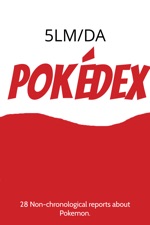
In the autumn term 2016, many of the children in our school have been captivated by Pokemon and Pokemon Go. As a result, we decided this would be the topic for our forthcoming non-chronological writing. What? a non-fiction text type being written about a fictional topic? can that be done? looks like it: "Harry Potter - The Character Vault" & "The Pokémon Encyclopedia, Official" for a start. 

Our hopes: the majority of children who are often turned off by writing would be engaged by this, those who already enjoy writing would still do so and that the few left 'in the middle' could be encouraged by the others. In addition, the children would be writing a report about a 'new' Pokemon, a Pokemon they would invent. Subject knowledge needed? No, because they're creating the creature. Can what they write be wrong? No, it's their creature. They can focus on report style and layout. What if anyone really doesn't want to write about a Pokemon? They can write about a mythical creature (shhh, that's what a Pokemon is!)

How did it go? Over the three weeks, we designed the area in which our Pokemon would live, learned about how Pokemon my act and interact and what attributes they may posses. At the same time, learning about report layout, style and contents. This meant that when it came to writing, the children were about to write about a Pokemon in the correct way. We wrote a first draft and then a second draft in Book Creator.  

We have created the children an audience in a number of ways:


We believe we've stayed within Copyright with this process as we've only used Pokemon as a prompt. We certainly engaged 120 Year Five pupils. We'd love to hear about your non-chronological report writing.

Sunday, 11 December 2016

Curating articles through Pinterest

If ,like us, you access a lot of different articles online, it can be a challenge keeping track of everything you wish to read. One technique we have started to use is curating the articles using a Pinterest account and a Pinterest button extension in our browser.
Beyond the different blogs we follow (which is upwards of 100 now - you amazing, interesting writers, you), there are emails sent daily with articles (a great one is diigo which often has contributions from the brilliant ICTMagic) and of course things which ping our way as we float around Twitter (@primaryideas).
It is often too difficult to read all of these ideas during the school day as we juggle planning, marking and having fun, and by the end of the day, we would end up with a load of memory chugging tabs open in our browsers.
To deal with this, we installed the Pinterest save button. Now, when we open a page that interests us, all we do is click the button, choose an image and save it in the relevant folder.
When it comes time to read, you can read it online or on any of the mobile devices which have Pinterest apps. Finding the time is still an issue, but at least now there is flexibility in it.
We are sure that there are loads of other ways of doing this, but this is one which works for us.

Monday, 5 December 2016

Minecraft and Grammar

We love to play Minecraft, kids love to play Minecraft (many, not all). Therefore, when possible, and without over-doing it, we use the game to provide a context to some of our lessons.
Recently, we have been giving our children some work on the different elements of sentences and have been focussing on the difference between verbs, subjects and objects. This is important knowledge for helping them to understand how their own sentences are structured as well as for when we work on the differences between the active and passive voice.
To help the children understand the difference we put on a quick game of Minecraft and started mining.


 The children were able to understand the difference between the subject (Steve) and the object (the blocks being mined) as well as the verb.
To reinforce this, we were able to change the 'skin' of the character as well as the view of the camera. This meant that the children could see the subject from different viewpoints (changing the skin changes the look of the main character). By changing the equipment that the character was carrying we were able to change the verb as well.


Just writing this has given me the idea to look at using Minecraft to reinforce writing in the first and third person. Look back soon for how that goes...

Tuesday, 29 November 2016

Evaporation Videos

This morning it was frosty, very frosty. Upon looking out of the window, I noticed that in the rising Sun's sunshine, the evaporating frost was visible. So, I went outside to try to film it.
Teaching evaporation and condensation to primary age pupils is always a challenge as it (usually) can't be seen and, for some, is a process that's hard to comprehend or believe. That may explain why we've made a number of videos to support our teaching of this scientific processes:


Saturday, 29 October 2016

Bake Off for Evaluation Success

Last week, my mind was cast back a number of years. A few years back, we were researching, designing and then making our own biscuits. During the 'research' stage, a Year Five boy explained to me how he was evaluating the biscuits I'd provided "Like they do on Bake Off". Genius! So, the lesson stopped, the previous night's Bake Off went on and our evaluating and vocabulary improved. Instead of mostly eating their way through biscuits and saying "nice", "nicer", "not so nice" and so on, children were now commenting on the snap, appearance and much more than just the taste and their personal opinions. 

Image credit: Little Bakery

Last week, I thought about how the baking on Bake Off was evaluated. Such depth could be used to improve all evaluating and in particular peer assessments and reviews. Watch and example of how to evaluate baking before evaluating something. 

Tuesday, 25 October 2016

Strictly Come Arithmetic

While watching Strictly Come Dancing (yes TV to the rescue again), I noticed a contestant was given a 7 by each of the judges. My brain immediately set to work and inside my head, I muttered to myself, "Oh, 28". Genius, I know. So, Strictly Come Dancing can be used for some four times table work. Maybe screenshot the scores, maybe make your own, maybe watch a dance that's given four of the same score (to engage the class) and ask the class to quickly work out the total. Of course, we can not do any of those here due to copyright (Have emailed the BBC to ask for permission though - they always say no though).
There's more here than just the four times table of course, it's mental addition. Score of 6, 6, 7, 6 is 3 X 6 + 7. So now all scores given are useful. Again, take screenshots, make your own, watch it back in iPlayer. I like the idea of seeing part of the dance for a bit of context. How quickly, and most importantly what methods are used, to get the total score given?

Saturday, 22 October 2016

For Your Classroom... 50 Primary English Questions - Volume 1

We've written another book. This time, it's a book of question types that could be used in English lessons (and other subjects). There are 11 types of question and each question type comes with 5 examples. 


We hope it's useful. Is is available to download from iTunes Store or as a PDF file. Let us know if it's useful.