Showing posts with label math. Show all posts

Wednesday, 16 March 2022

Calculators in our classroom

 Back in the vanishing past, the calculator was a staple in the Year Six classroom as it was a required piece of equipment on one of the maths papers.  Now, of course, they are expressly forbidden and, as such, they can be persona non grata in many classrooms. 

However, we still jealously protect our class supply of calculators. For us, even with tests looming, we try hard to keep to our principle that we are merely one step on our children's educational journey, so we endeavour to send our children to secondary with the skill of being able to use a calculator.

The reasons for this are two-fold. Firstly, the use of a calculator is an important life skill. As we battle our children on developing their understanding of methods such as long division, we hear, echoing at the back of our heads, the message from a secondary colleague, "Nah - we use calculators for that." Therefore, we want the children to be ready for that step as they get into Year Seven. 

What happens when we get the calculators out for the first time? Distraction - pure and simple. To paraphrase an old song, "Those buttons are meant for pressing". The children start trying to find ridiculously hard calculations to 'beat' the calculator at. "Ha, look, I made mine get an E on it". Then one child remembers their older sibling showing them how to spell words on it. It is easy to see how this spreads round the classroom as suddenly the calculators start getting turned upside down:710, 0.7734 (if you are lucky). It is important to give them some time on this as it is only once you get through this phase, that it is time to teach the children how to use them. 

For us, the mantra we teach the children is, "You put rubbish in, you get rubbish out". We teach them the locations of the important buttons and what happens if you press they '=' button more than once. Then how important it is to do calculations more than once to check they get the same answers to identify 'user-error' and then we teach them that we are going to be using these tools for checking our work. 

Because this is what we use them for the majority of the time. When we are working on those fluency lessons in maths, it lets the children do their own live marking. They do a calculation using a written method and then they check the answer using a calculator. By doing this, the child knows immediately whether they need to look back at their work.  This is far more efficient than waiting for an adult or peer to check. It is easy for the teacher to see if they are still doing their written methods as, if it is all done on a calculator, there is no regrouping or other notations. 

We make sure that we model this in our lessons too. There are calculators available in interactive whiteboard software or online. It also lets us identify some of our 'deliberate' mistakes and model checking our work - honest. 
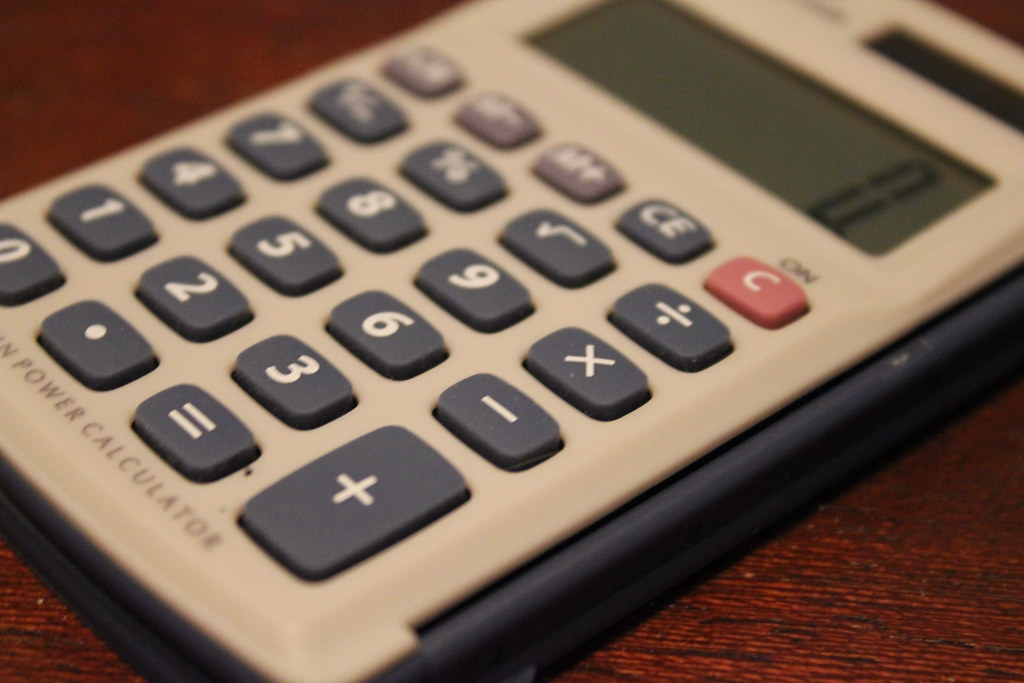

"Calculator" by jakeandlindsay is marked with CC BY 2.0.


Friday, 14 July 2017

Times Table (Ball Pit) Relay


After seeing something on Facebook, I did a times table relay with my class. On Twitter, Mr Dyson saw it and liked it. He challenged one of his teachers to 'do better'. That set me thinking!
And, today this is what we did...


I filled two recycle bins with ball pit balls;

Outside, I stood the sticks against a wall;


I put the Velcro numbers for a times table in each of the ball pits;

I then got the class, in turn, to run and collect a number, work out the times table and add it in the correct place on the stick. 


It. Was. Great!

Friday, 16 June 2017

Times Table Relay

A little while ago we saw this video on Facebook:


Today, we gave it a go with our Year Five Class:


It was good:

- times tables
- team work
- critical thinking
- proof reading
- correcting other's work
- fun in the sun
- #math

Just another way to cover times tables that doesn't involve sitting at desks! Thanks to AnAppleForTheTeacher for sharing.

Saturday, 13 May 2017

Physical Multiplying and Dividing by 10, 100 & 1000

Here, we go. Another, "We saw a Tweet and post..."


So, we saw the above Tweet and then went and tried it out. This video has always aided our teaching of this mathematical concept, but saw instantly how this could add to it. 


We took some chalk and wrote out some place value headings and asked the children to stand behind them. Then called out X and ÷ questions and watched them move. Sometimes they were correct, sometimes wrong and sometimes disagreed. They enjoyed it, did some learning and we had a few discussions. See below for a video of what we got up to.


Monday, 16 November 2015

Make X in Maths

Earlier this year, we saw the following Tweet from Ben:
At the time of reading his Tweet, we'd not heard of 24 Game. However, as a result of Ben's Tweet, we've been using the rules of '24 Game' in our maths classes. 

We started by downloading the app that would allow a demonstration of 24 Game to the class. We also found the board game available online for UK delivery.The 24 Game website also has a Teacher's Tools page. In addition, there are many online examples of the game too.

The app has been excellent for children to work with numbers and the four operations. In addition, as Ben did, we've got our classes to make their own game boards to then give to a peer for them to solve. This creating of the game and then a peer trying to solve extends the number skills involved. And, as you may have already noticed, the total does not always have to be 24. 


We've been collecting some of the children's creations on a Padlet Wall.

This app demonstrates that playing cards could be used for the activity too.

Linked to this, we continue to use Quento and KenKen to work on similar calculation skills.

Tuesday, 10 November 2015

Padlet & Number Talks

Last week, I carried out a Number Talk with my class and needed some of the responses to use at an event with parents. While thinking of a way of capturing the childrens' work (photocopy whiteboards, run around with a camera etc.), an idea came to me. Children carry out their Number Talk as usual, but instead of vocalising their answers and methods, we'd upload them to a Padlet wall

If you've not come across Number Talks before, this may be a useful starting point. In brief, the teacher poses a question, that the children answer. Children share their answers and then, in turn, explain how they got to their answer. A range of methods are shown, misconceptions addressed and discussions held. 


Here's what I did:

- I set up a Padlet wall (http://padlet.com/Murphy/5den0yclatx);

- I posed the following question: 236 - 199;

- children calculated the answer using their chosen mental or written strategy;

- children uploaded an anonymous answer to the Padlet wall.

I then projected the responses and, in turn, we looked at each answer and the method used to arrive at that answer. The anonymous responses allowed a slightly more blunt discussion about the methods used, but naming responses would also have benefits.  

There you go, another post about maths and another that involves Padlet!


Monday, 31 August 2015

Math Duel League

In 2014, Lee Parkinson wrote an iBook to share ideas for iPad device use during the Football World Cup. This blog post builds upon one of Lee's ideas in that book. Incidentally, all of Lee's books are very useful (for both Apple and Android devices) and can be found both here and here

 Image credit: Lee Parkinson

In the book '15 iPad Lessons for the World Cup' Lee outlined an idea for using the Math Duel app in class to improve maths skills through a bit of healthy competition. This year, I plan to build upon this with the Math Duel League...

This is an idea I've been playing around with for a while and hope will work. I imagine it'll take a bit of tinkering with, and as I do, I'll update this post. As I'm writing the post before trying it out, any suggestions others have are most welcome.

We're in school for thirty odd weeks during the year and I have thirty children in my class. This is where the idea started. How about each child playing another child each week through the year and then, at the end of the year, have a completed league table. 

- Each child must play each other child 'home' and 'away' during the year. A copy of the class list for each child to tick off as they go will be useful for this.

- 'Home' is the child sat in their usual class seat. The 'away' child moves to sit with them. The child at 'home' inputs the settings (there needs to be a fair play agreement here). They then play their game.

- On Google Drive, there'll be a spreadsheet for children to input results into and the table can be created from this. The children will be able to access the Google Drive document from the iPad device once their game has finished. 

My main concern using thinking about this has been about the children who may finish bottom of the league. I'll not share the whole league table with the class. The 'home' and 'away' and the 'home child' being in charge of the settings should enable all children to win some games. Another thought was about handicaps based upon head starts or giving children certain times tables to work on. 

Image Credit: Ellie's Games


I'll give it a go and see how it goes...

Monday, 3 August 2015

Rolls and Flips: Probability All Done

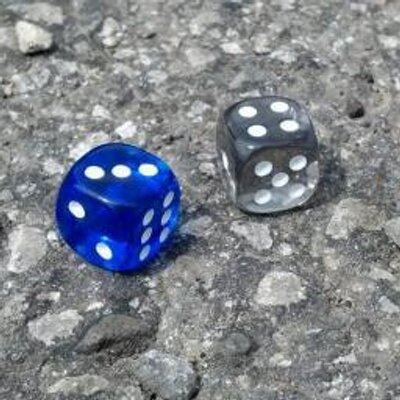
Covering probability or data handling in maths and using lesson time to generate data? Well, it's already been done for you:

@RollADay are rolling a dice each day. The data can be found here: rolladay.com


Image credit: @RollADay

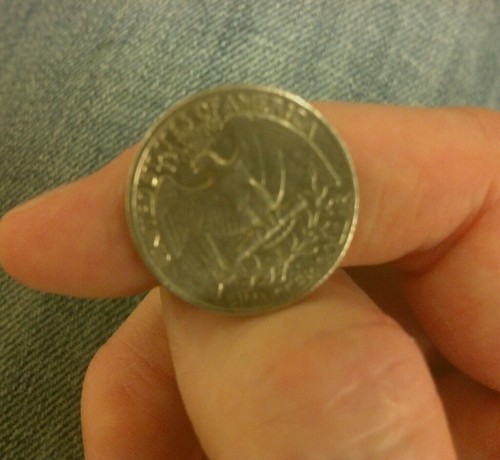
@FlipADay are flipping a coin each day. The data can be found here: tadfry.com/flipaday

Image credit: @FlipADay

Follow the accounts. Use the data. Maybe even share with the accounts what's been produced using the flips and rolls.

Both of these are operated by Tad Fry. Other useful online tools can be found on his site.

Tuesday, 14 July 2015

Road Sign Angles

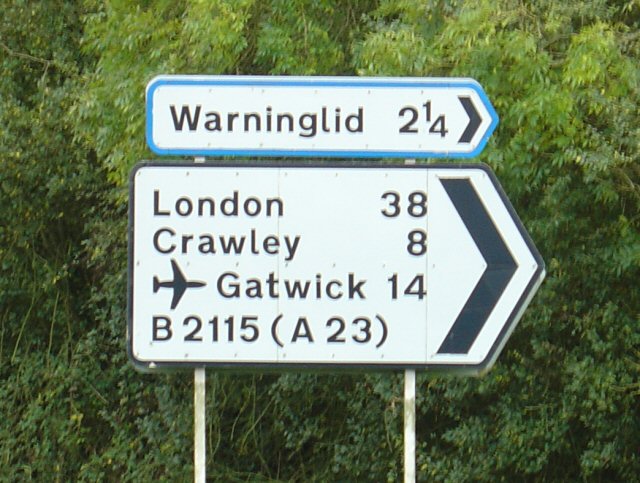
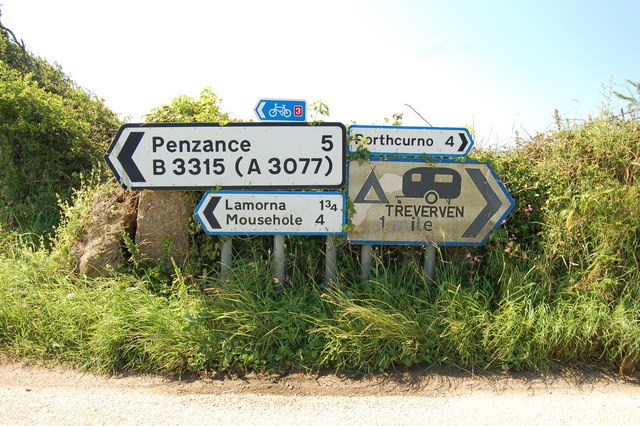
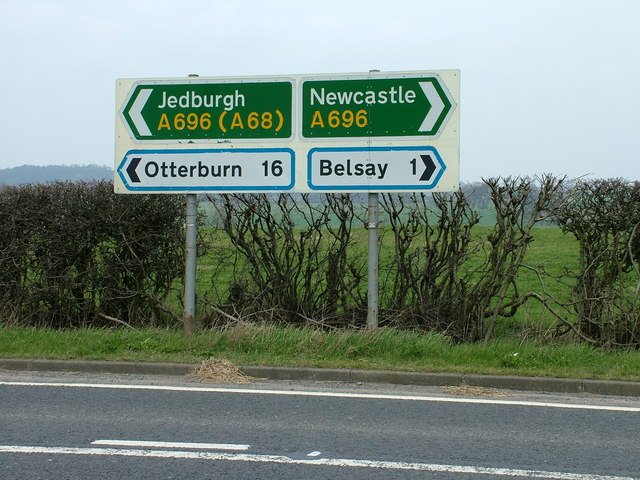
In the past we've used roller coasters as a real-life link and vehicle for studying angles in maths. When driving to work last week, I started to wonder about angles I could see on road signs...

It started with the 300, 200, 100 yard marker boards: "What angle are they at?"


Next, on the the directional signs, "Are the two obtuse angles on the end of the smaller are larger signs the same measure?"


Are there similar or same angles in lots of road signs? 

As of September 2007, 'Traffic Signs'.

Due to the responsible nature of my driving, I chose not to take photographs of the road signs whilst driving. These images came from a Creative Commons image search. However, next time I'm a passenger, I may snap some of my own. 


Sunday, 17 May 2015

'We Make Use of...' Mathletics


Image credit: www.3plearning.com


We've been using Mathletics for about six years now. Initially, it provided a quick and easy way to direct children towards online activities.

However, it's much more powerful than that and is being improved all the time. There are no doubt parts of the site we are yet to find or utilise fully. The 'Live Maths', which is no doubt the area that children are drawn to initially, is ideal to get children to practise mental arithmetic as it involves competing against anonymous peers - sometimes in class, but often outside of the classroom. Children are engaged by this and enjoy competing against other children from around the world. A lesser known aspect of this, is the ability to change the level at which children are working to make the mental questions harder.

For home learning, we're able to set tasks that link to what has been taught in class and that children must complete before they can take part in any other part of Mathletics. Afterwards, the score the child achieved is logged and can be viewed by the teacher. Some teaching can then take place and the children can even retake the activity to see if their understanding of it has improved. There is a wide range of topic areas and children have the ability to self-differentiate by choosing or harder tasks from within the topic area.

We are increasingly making use of this website to provide personalised learning tasks in the home. As we adapt to assessment without levels and integrate the mastery curriculum, many schools are assessing children based on statements of mathematical skill. Mathletics provides an excellent tool for developing curricula based on these statements through the setting up of personalised programmes. Teachers can create a programme made up of the different statements and drag relevant activities into it making a personalised programme, which children can work on independently at home. The great thing is that  many, if not all, of the activities come with tutorial videos to help parents and children. We had two set programmes used in Year Six at a working towards Level 4 and working towards Level 5 and, by assessing which areas children needed most practise, we were able to target home learning at areas that the children needed most. The setting up of the programmes take time, but if several people are working on them this is not only simple, it is also a tool which can be used across the school and for some time to come.

Times Tables Toons are a range of music videos which encourage children to chant their multiplication facts. They are a little cheesy, but certainly catchy enough even if they are discrete from associated division facts. 

There are various different certificates that can be achieved by children working with Mathletics. We hand these out in class (Bronze), in year group assemblies (Silver) and whole school assemblies (Gold). This recognises the achievements of those receiving the award and encourages others to also work towards the certificates.


Note: We have written this post as a result of using this website in our classrooms. We have not been asked or paid to write. We are often approached to write posts, but have and will continue to only write about what we have done in our classrooms. We're two full-time class teachers choosing to blog about our experiences.

Monday, 11 May 2015

Our Own Maths Clock

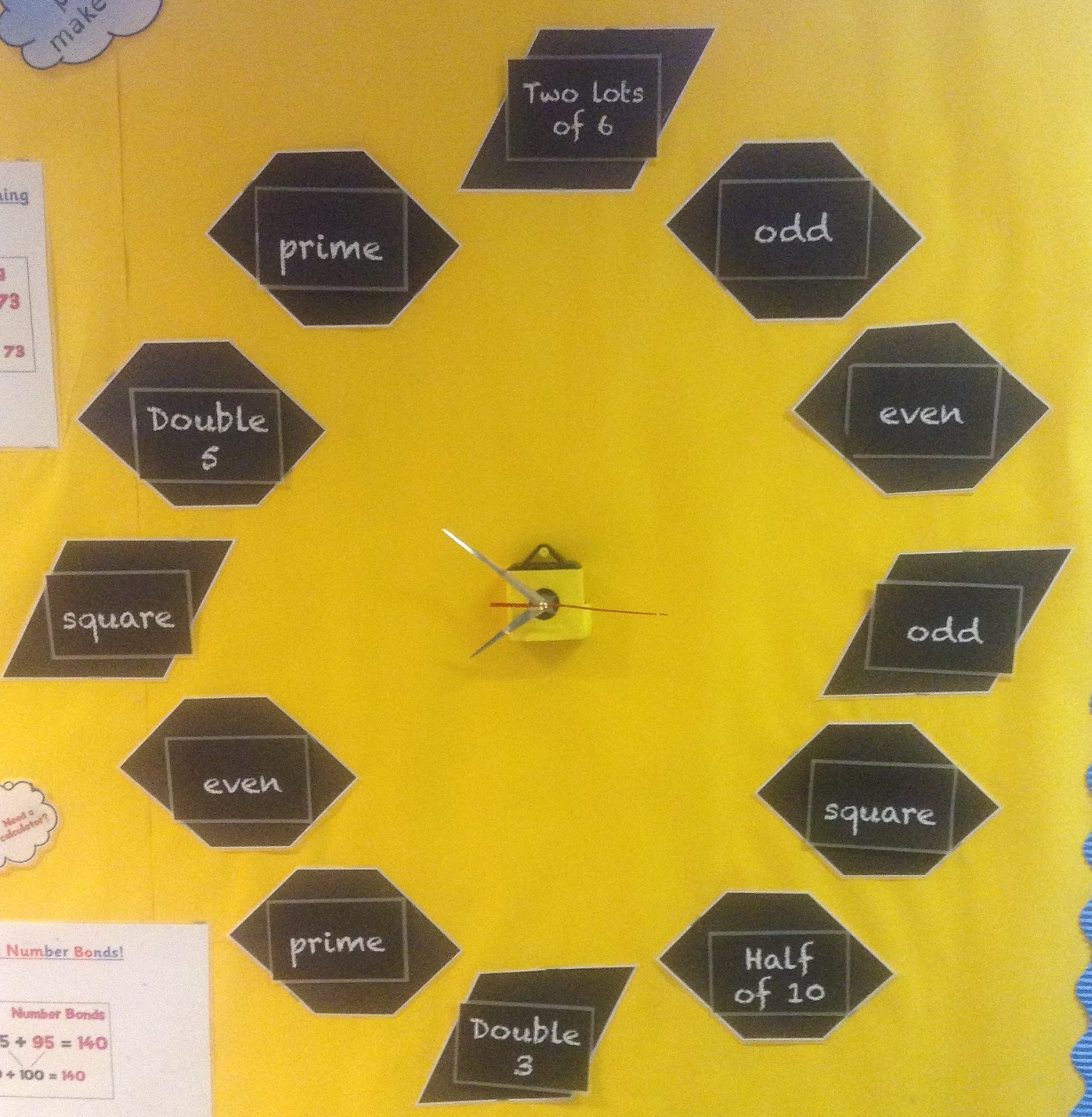
During a visit to the Manchester Museum of Science and Industry, we noticed a lovely clock where the digits had been replaced with mathematical formula. A great idea for getting children to think about numbers.


However, it is too small to be of use in classroom for us and, frankly, was probably too hard for the children so we decided to make our own. We used Powerpoint to create the different representations for each digit and created a different set for each term ranging from straight forward calculations to the names of 2D shapes. To make it a clock we bought a clock mechanism for a ridiculously cheap price from the internet (like this one). Hey presto - one mathematical clock for the classroom. If you want to use it, please feel free to use the PDF from our Dropbox.

Embedded image permalink

Saturday, 28 March 2015

Estimation Part II


Previously we looked at one of the ideas we are using topromote the skill of estimating in children including a link to the website www.estimation180.com set up by a teacher called Andrew Stadel. In this entry, we are going to share some of things we have done to further promote estimating with our children.
The importance of estimation was first raised when we read Jo Boaler’s thought-provoking book ‘The Elephant in the Classroom’. Throughout the book, the author reiterates the importance of estimating as a skill for all mathematicians. Armed with this suggestion, we looked at the children in our maths classes and noticed that many of them found it hard to use estimating to help them check answers, use common sense to identify solutions or to support their problem solving.
In order to develop estimation, we developed two immediate solutions. The first was to set up an estimating display within the class. Similar to the previous post, this was an image next to a whiteboard so that children are able to put their suggestions near the picture.
So far, we have used images of Minecraft buildings, football stadiums and even a picture of a tub full of baked beans. Purposefully we make it clear that there we do not have an accurate answer and instead encourage children to go through a process of estimating the correct answer.
Estimate how many blocks were used to make this castle.


At the same time as developing this display, we also discovered the fabulous www.estimation180.com website. The author of this incredibly useful website has created an archive of a vast number of images from which children can make estimations. The truly brilliant thing about the website is that many of the images are linked over a range of days so children, as part of a process of estimation, can build on the information they have found over previous days. Coupled with this, each page has a range of questions on such as ‘what would be a low estimate?’ or ‘what would be a high estimate?’. The author also always provides an answer either with a photo or a video.
By making regular use of this website and the questions, we have developed with the children a process of using estimation in their maths:

  •  What is a low estimate? – developed into – What is a low estimate that is close to the correct answer?
  •  What is a high estimate? – developed into – What is a high estimate that is close to the correct answer?
  • Make your estimate.

A photo from the website is often the image that children work from at the start of the lesson as a basis for a quick mathematical discussion to start the lesson. At the start of the year, my favourite section of the website to use starts with toilet paper as it is something children are able to relate to straight away.

How many sheets on the roll of toilet paper?

It is worth noting that many of the measurements are American, but have linked metric measurements as well.

Tuesday, 17 March 2015

More Times Table Ideas

On Monday 16th March 2015, our school held an internal TeachMeet as our staff meeting. Here's one of the presentations we made as part of that...


Update 26th March 2015:

Thursday, 12 March 2015

Spoof in Maths

In my younger days, I loved a game of Spoof. I thought I was quite good at it. I enjoyed the challenge of trying to outwit others at a game that involved elements of chance, estimation and prediction.


Earlier this week, I was looking for a new starter for my maths lesson. Spoof came to mind, I grabbed some counters and decided to give it a go. 

I introduced the game (explaining the rules and giving a demonstration) and off the children went. Lots off excitement, success, mathematical thinking and reasoning. 

Anyone unfamiliar with the game, here are the rules:

- each player has three objects that can be held in their hand;

- everyone chooses to put 0, 1, 2 or 3 objects in their hand and holds it out;

- in turn, each player predicts how many objects are in all the hands;

- the winner is the one with the correct answer.


In a game of three players, the total could be between 0 and 9. To give an answer, the player must use times table and counting knowledge, estimation and prediction skills, while knowing what's in their hand and taking into consideration what other players have said.

Note: I did not give the game a name as I'm aware of it being, "typically played as a gambling game, often in bars and pubs".

Wednesday, 11 March 2015

Me and My Counting Stick!


Well, how far I've come in a year!


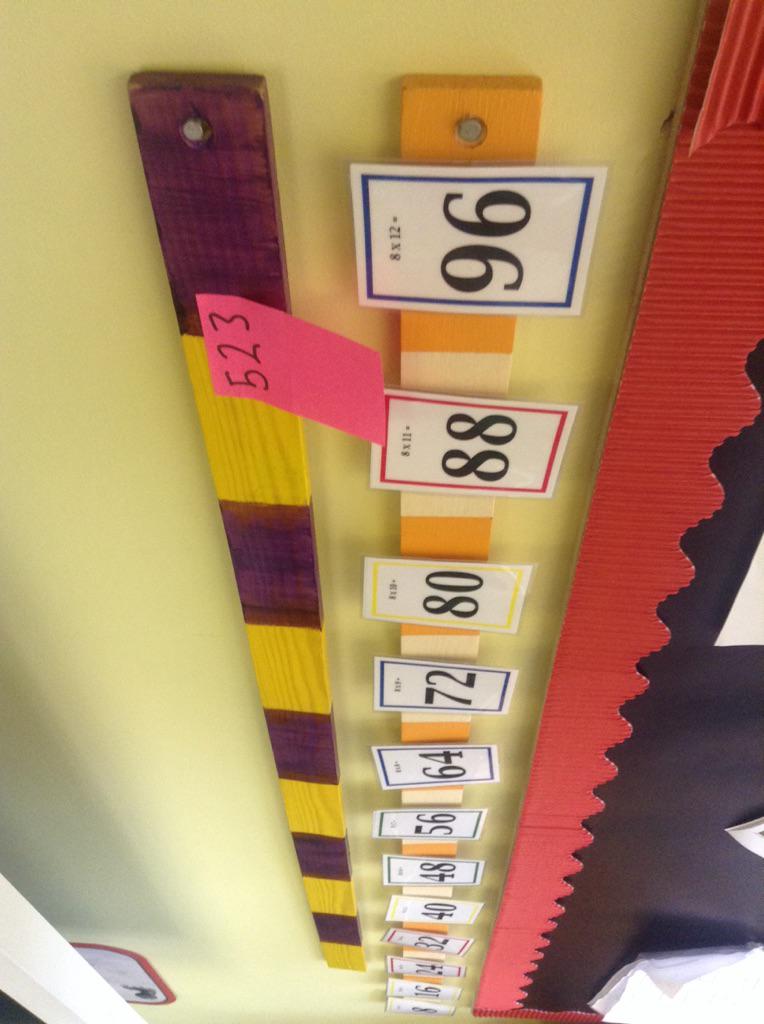
5th March 2014, our staff meeting was to paint a counting stick. I had no idea what to do with it! This document (still open for edits) helped and the stick is now TWO sticks. They have their own place on the wall when not in use. 


Take a look at the crowdsourced document. Take some ideas from it and add some of your own if you have any. For me, it's gone from a painted piece of wood to an invaluable teaching too.

Sunday, 8 February 2015

Estimation Challenge

At the end of January, I attended a day's maths training. It was good, I got lots of good ideas. The one that stood out was this one:

I sat next to a lady, whose name I didn't find out, let alone what school she was from (if I find out, an update will be added). She gave me the following idea.


Ask the children to fill pots and containers at home with 'stuff'. For example, paper clips, pebbles, marbles and so on. Then, each week, put one of these on display and invite the rest of the class to estimate the number of items in the container. Ensure the child setting the challenge know the answer. 


Sunday, 1 February 2015

Give Them The Answer

When completing calculations in maths, I've sometimes found that a child has gone through a whole lesson and some how managed to get all or most of the work wrong and not been picked up by a peer or an adult. While on one level this is not a huge problem, as it can be followed up later, it's not ideal.

I'd been looking for a way to avoid this and here's what I came up with...

Give the children the answers.

A) Get the children to start and after a few minutes show the answers to question one for all levels of differentiation, a few minutes after that the next ones and so on...

B) Get the children to start and then put the the answers to the first three questions only, as a guide. Children complete the rest of the work without know the answers.

C) Give the children the questions, with the answers already filled in.

By no means do I use this all the time. It's a idea, to use now and again. Does it work? Yes. The children need to understand that maths (or any work) is not always about getting the right answer. Mistakes are ok. In a lesson, children are learning, trying out and developing methods. Not doing a 'getting ten right answers' exercise. Children need to be confident in trying out their methods or jottings, comparing their answer to the one given and then, if there are any errors, they need to look for what went wrong, seek help from a peer or talk to an adult. 

Give it go. Not every lesson though.

Thursday, 13 November 2014

Playing Cards in Maths

This year, we are having a bit of a focus on practical maths and teaching maths using lots of apparatus. Earlier this year, we came across "41 Math Card Games" via Twitter. We clicked the link and came across an Australian website requiring a small payment to buy the 'book'. The book is delivered by email as a .pdf. So, we paid for the book and have not looked back since…


A pack of playing cards do not cost much.

They are designed to be handled, lots!

They involve looking at numbers in different ways (Ace, Jack can equal 11, the numbers are represented by the figure and pictorially and so on…)

Any game involving numbers 1 - 10 (or up-to 13) can be played with them. 

Children enjoy using playing cards (well, I know 30 Year Fives who have so far demonstrated this).

We're not going to write here about what is in "41 Math Card Games"  but certainly recommend making a purchase. It'll give you ideas, remind you of things you may have forgotten and give you starters, drop-in activities, pleanries and "Oh, I've got 10 minutes, what shall we do? Answers". Any associated resources we make will be placed here. The cards shown in our Dropbox folder game from Open Game Art.

This afternoon I had 30 boys playing one of the games and here's what he had to say afterwards.

Saturday, 25 October 2014

Deconstructed Maths Problem Solving

In the past, we've used worded problems, extended worded problems and open ended maths investigations. All with various success. Earlier this year, we were introduced to Deconstructed Maths Problem Solving after training from 5ense of Number.


We have an example here. Print these out so that there are enough copies for one of each per group in your class. Put them in piles, of the same sheets, face down, where you will base yourself in the lesson. Number each pile and keep a note for yourself of which information is in each pile.

Here's how it works:

- introduce the problem by stating that this is actually about you and that it is going to happen. Make the children believe it's real. (In the example given here, it's your family, your holiday and you'll actually be going). Do not give away any information that's on the sheets;

- in groups, the children list everything they think they need to know to solve the problem;

- now, one (and only one person) at a time from each group can come and ask for the information they think they need. For example, "How many people are in your family?" And, they'd be handed the sheet that gives them this information.

- the group calculate the parts of the problem they know about as, and when, they get them;

- as time is running out, allow children to come and collect any sheets they have not yet collected;

- finish by running through the answer together.


This has not been about getting the right answer or completing the investigation (although most groups have done both). It has been about group work, discussions, completing numerous calculations and looking at jottings or methods used.

Give it a go. The children complete 'loads of maths' and it's been a fantastic activity the two times we've run this to date. As we make more of these, we'll share them via our Dropbox here.

Monday, 20 October 2014

Time for Feedback

What's had the biggest impact in my classroom so far this year? Providing a timetabelled feedback session, that's what.

Last year, a year group at my school ran 'Feedback Friday' each week and I've now taken that into my own practice. On a Friday, between 11:20 and 11:50, my class have our 'Feedback Friday' sessions. 

Here's what we do:

- all the books are out on the tables;

- children have red pens and coloured pencils (see this blog post for more information on that);

- children review the work from that week that has been marked and act upon the feedback provided to them.

- if all the feedback has been acted upon, children look at their work and independently look for ways in which their work may be improved.

At the time of writing, we have had five of these sessions. It's not been as straight forward as outlined above: the children have needed coaching and guiding through responding to feedback. Each time I have directed children, as a whole or individually, to a particular piece that they should begin with and then allowed them to look at other books or items of work.

Of course, lessons during the week still have elements of looking at previous work and learning from feedback, but having the Friday session means that I know there's a dedicated half an hour slot in the timetable for children to look at the feedback provided and act upon what has been identified. It's also great to see children looking for and finding ways in which they can improve their own work as they revisit it.