Showing posts with label television. Show all posts

Saturday, 16 June 2018

#Taskmaster - Obscure [Noun] Miming Task


So, here's how the task went:
- contestant was handed an envelope. In that, it said to write down as many obscure animals as possible;
- once the list was written, they were handed another envelope. This envelope disclosed that they needed to mime the animals for their team-mate to guess.
- result, amusing TV!

The clip below shows one of the attempts and comes with a language warning:


So, how could this be used in the classroom?

- Name obscure adjectives, adverbs and so on...
- Name features of a topic, eg rivers, space, Egyptians
- Name cities in the UK
- It's endless...

But, you can't do it too often. It relies on the person writing the list not knowing the next bit is coming.

Taskmaster used this as part of a comedy program. We're certainly not looking to mock or ridicule children. The skills here are: deep thinking to make the 'obscure' list, quick thinking when the task develops, ability to communicate without words and the ability to interpret - and, this person must also have the knowledge to know what's being described! 

Give it a go.

Sunday, 6 May 2018

Do You Know?

It's my own children and the TV box in the corner of my living room helping me out again...

My toddlers and I have recently discovered 'Do You Know' on CBeebies. "Join Maddie as she finds out how things work."
As it is on the CBeebies Channel, it is aimed at toddlers, much younger than most of the primary age group. But, it's still largely appropriate. Maddie covers technical aspects of aeroplane flight, how plant pots are made, friction on a slide and more. It is a fine balance between being technical and factual, much of which goes over my chidlren's heads, whilst also being engaging to very young children. Primary age pupils will 'get' the factual information and be mostly still engaged by the child-friendly format of the show.

I have used them as an opportunity to add to our general learning by playing some at the start or end of the day or between lessons. But, they can be useful in lessons - the playground program in science when learning about friction for example. 


Friday, 12 May 2017

#Taskmaster: 5 Letter Word Game

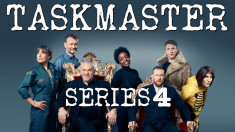
Yay! Taskmaster is back on TV. Yeah, it inspired us, again!

This time it was Series 4, Episode 3. On this occasion, it was the final task that we were most interested in. The contestants stood side-by-side and were told that music would be played. In turn, they needed to say a five letter word when the music stopped. If someone couldn't say a word or repeated a previously said word, they were out. Each time the game restarted, the number of letters in the word changed (2 letters was surprisingly hard). 

Image credit: UKTV - awaiting permission

- Group of children stand up.
- Give them a number of letters in a word (e.g. 5).
- Play music.
- Each time the music stops, the pupils, in turn, say a word with the required number of letters.
- Repeat or fail and you're out.
- Change number of letters.

 Enjoy!
 

Saturday, 25 March 2017

5 Gold Rings in Class

Have you been watching ITV's new quiz show, '5 Gold Rings'? It's great, we really like it. Watched the first episode, shouted at the TV, discussed (little left, bit down, bit more up...) and decided we'd watch again. Then, second episode, we discovered the app - we could play too while watching the contestants! Then, of course (like we do), we thought of a way to get it into class...

The uses are endless. Here's how it works: there's a picture of something with part missing or covered up. The person playing the game has a ring and needs to predict where something is. For example, finding the number 4 on this clock face:
Print out the picture with a missing part on paper, provide children with a pen and something circular and ask them to draw a circle where they thing the target is located. To allow children to check their work, have the answer printed on a piece of OHT paper that they can lay over their answer to see how they did. 


                 Guess                                                                  Compared to Answer

Both, Side by Side

As I said, the opportunities for this are endless. But, here are some example questions and answers. Included there are: the clock face shown above, 'find Northern Ireland', 'locate the amber traffic light' and 'Where's the top of the A?'.