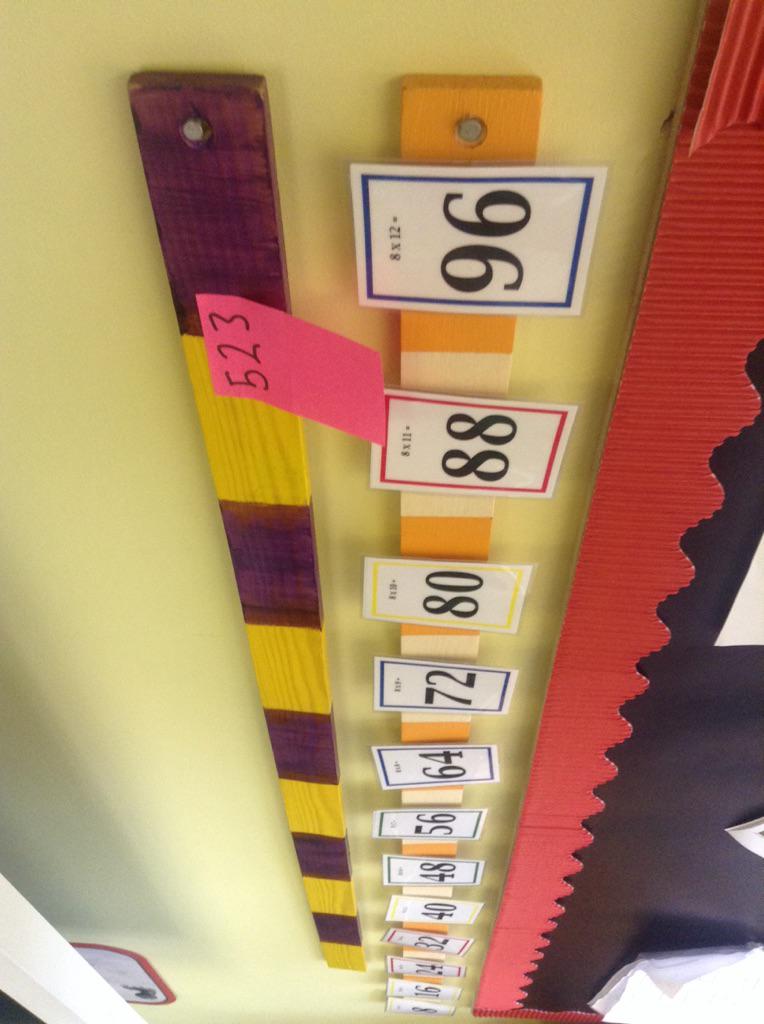
It was the video's thumbnail (above) that caused our minds to begin thinking 'school' and 'maths'.
Like you, we imagine, one of our biggest tasks is the 'how do we get them engaged?' question. Football is usually quite successful!
Here's a photo of Messi taking a penalty. Similar to us, you could search the internet, or screen capture penalties being taken (remember to check copyright laws!).
If you attend football matches, you could take your own photos:
Perhaps, even better. Get the children taking and photographing their own penalties.
Finally, whichever you choose, give the children example shots of the penalties being taken. Get them to put on the '0 degree line' and measure the angle from there. If using your own photos, is there an angle that guarantees scoring?
I was in the park with my three year old daughter. I found a conker on the floor. "Look," I said. "What's that?" she replied.
I explained, it's a seed, grows into a tree, you can play with it, it's spikey, but brown and shiny inside. "What?" she replied!
So, we're going to plant it...
So, right now, it's about 'Conker Season'. Grab one. Plant it. Share it's journey with this class. And, your next... Then, plant it in the school grounds.
Talk about how it grows and remember where it came from and what it will grow into.
In fact, as the year goes on, plant the odd seasonal item and have it there in class as an ongoing experiment that can be referred to.
- contestant was handed an envelope. In that, it said to write down as many obscure animals as possible;
- once the list was written, they were handed another envelope. This envelope disclosed that they needed to mime the animals for their team-mate to guess.
- result, amusing TV!
The clip below shows one of the attempts and comes with a language warning:
So, how could this be used in the classroom? - Name obscure adjectives, adverbs and so on... - Name features of a topic, eg rivers, space, Egyptians - Name cities in the UK - It's endless...
But, you can't do it too often. It relies on the person writing the list not knowing the next bit is coming.
Taskmaster used this as part of a comedy program. We're certainly not looking to mock or ridicule children. The skills here are: deep thinking to make the 'obscure' list, quick thinking when the task develops, ability to communicate without words and the ability to interpret - and, this person must also have the knowledge to know what's being described! Give it a go.
Ok, ok, maybe we should just start watching and enjoying TV instead of linking it back to the classroom. But...
Again, in the most recent series of Taskmaster there was a video task. The task was to perform something in synchronisation as a pair. We've previously used the 'Backwards Video Task' with some excellent outcomes and group/partner work.
In this task, pupils need to work as a three. Once to act as camera operator and the other two to perform something either mirroring or matching each other. This requires thought as a group to decide the act to perform, what each person will do and how they will remain in sync. In addition, linking it back to gymnastics; mirror or match?
We took some chalk and wrote out some place value headings and asked the children to stand behind them. Then called out X and ÷ questions and watched them move. Sometimes they were correct, sometimes wrong and sometimes disagreed. They enjoyed it, did some learning and we had a few discussions. See below for a video of what we got up to.
This time it was Series 4, Episode 3. On this occasion, it was the final task that we were most interested in. The contestants stood side-by-side and were told that music would be played. In turn, they needed to say a five letter word when the music stopped. If someone couldn't say a word or repeated a previously said word, they were out. Each time the game restarted, the number of letters in the word changed (2 letters was surprisingly hard).
Here's an idea to help with those practical lessons. Particularly art, DT and so on...
You know, sewing where half the class want their needle rethreading, DT where everyone needs to use the glue gun and similar occurrences.
It uses the system I first came across as a child in Clarks. You go in the shop, take a ticket with a number on and then wait. In an orderly fashion, those with tickets are seen. The shop assistant decides when they next see someone.
In the classroom, put up five Post-It Notes with the numbers 1-5 on them. If someone needs help from the teacher, they take a number and see what else they can get on with. In order, the teacher calls out which number they will see next (in a "Cashier number 4 please" voice of course!). When the child has been seen, they put their number back for someone else to use. If there are more than one adult in the room, each adult has their own coloured Post-It.
In the past year, I've begun getting more involved in apps that allow me to play games, via my phone or tablet (LettersPress, Words with Friends, Yahtzee and more), with friends, family and 'strangers'. A bit late to the party I know!
I enjoy playing these games. I have my go. The details are sent to the opponent. When they can, they play and so on. Sometimes, there are a few moves in an hour; other times it takes days.
It's made me think about how this could be used in class. Set up a chess board in the classroom. The teacher plays against the class, taking turns as and when get the opportunity. Scrabble would also work in a similar way. Yahtzee for a maths element. With both of these, the actual board game could be used, or a 2D laminated version could be used on the wall.
I've watched TED Talks in the past. This week, for the first time, I used on in class. We used the one below, with a fantastic outcome and enjoyment by all.
The talk was engaging, interactive and at a level that all my Year Five children could join in with. The picture below shows my efforts.
All children were involved in all of the lesson. They listened intently and followed the instructions in the video. In fact, in my maths lesson that followed, I had to remind many that the art lesson had ended and we were now focusing on something else!
Following on from this experience, I'm going to look for some more TED Talks that could be useful in class. Some linked to our curriculum, some to inspire about writing, maths or science and others to deliver a message, thought or outlook on life. I'll update this blog post with any that I use. In addition, if you have any that would be good to show in a primary classroom, please let us know in a comment below, email or via Twitter.
TED Ed is also worth looking at for videos aimed more directly at what may be part of a school's curriculum.
At the time of reading his Tweet, we'd not heard of 24 Game. However, as a result of Ben's Tweet, we've been using the rules of '24 Game' in our maths classes.
The app has been excellent for children to work with numbers and the four operations. In addition, as Ben did, we've got our classes to make their own game boards to then give to a peer for them to solve. This creating of the game and then a peer trying to solve extends the number skills involved. And, as you may have already noticed, the total does not always have to be 24.
We've been collecting some of the children's creations on a Padlet Wall.
This app demonstrates that playing cards could be used for the activity too.
Linked to this, we continue to use Quento and KenKen to work on similar calculation skills.
We've been using Mathletics for about six years now. Initially, it provided a quick and easy way to direct children towards online activities. However, it's much more powerful than that and is being improved all the time. There are no doubt parts of the site we are yet to find or utilise fully. The 'Live Maths', which is no doubt the area that children are drawn to initially, is ideal to get children to practise mental arithmetic as it involves competing against anonymous peers - sometimes in class, but often outside of the classroom. Children are engaged by this and enjoy competing against other children from around the world. A lesser known aspect of this, is the ability to change the level at which children are working to make the mental questions harder. For home learning, we're able to set tasks that link to what has been taught in class and that children must complete before they can take part in any other part of Mathletics. Afterwards, the score the child achieved is logged and can be viewed by the teacher. Some teaching can then take place and the children can even retake the activity to see if their understanding of it has improved. There is a wide range of topic areas and children have the ability to self-differentiate by choosing or harder tasks from within the topic area. We are increasingly making use of this website to provide personalised learning tasks in the home. As we adapt to assessment without levels and integrate the mastery curriculum, many schools are assessing children based on statements of mathematical skill. Mathletics provides an excellent tool for developing curricula based on these statements through the setting up of personalised programmes. Teachers can create a programme made up of the different statements and drag relevant activities into it making a personalised programme, which children can work on independently at home. The great thing is that many, if not all, of the activities come with tutorial videos to help parents and children. We had two set programmes used in Year Six at a working towards Level 4 and working towards Level 5 and, by assessing which areas children needed most practise, we were able to target home learning at areas that the children needed most. The setting up of the programmes take time, but if several people are working on them this is not only simple, it is also a tool which can be used across the school and for some time to come. Times Tables Toons are a range of music videos which encourage children to chant their multiplication facts. They are a little cheesy, but certainly catchy enough even if they are discrete from associated division facts.
There are various different certificates that can be achieved by children working with Mathletics. We hand these out in class (Bronze), in year group assemblies (Silver) and whole school assemblies (Gold). This recognises the achievements of those receiving the award and encourages others to also work towards the certificates.
Note: We have written this post as a result of using this website in our classrooms. We have not been asked or paid to write. We are often approached to write posts, but have and will continue to only write about what we have done in our classrooms. We're two full-time class teachers choosing to blog about our experiences.
Anyone able to offer any help?
"So, I’ve got a counting stick for maths. Now what?”
http://t.co/LbkYnhSCUe — Liam (@ThisIsLiamM) May 14, 2014
5th March 2014, our staff meeting was to paint a counting stick. I had no idea what to do with it! This document (still open for edits) helped and the stick is now TWO sticks. They have their own place on the wall when not in use.
Take a look at the crowdsourced document. Take some ideas from it and add some of your own if you have any. For me, it's gone from a painted piece of wood to an invaluable teaching too.
At the end of January, I attended a day's maths training. It was good, I got lots of good ideas. The one that stood out was this one:
I sat next to a lady, whose name I didn't find out, let alone what school she was from (if I find out, an update will be added). She gave me the following idea.
Ask the children to fill pots and containers at home with 'stuff'. For example, paper clips, pebbles, marbles and so on. Then, each week, put one of these on display and invite the rest of the class to estimate the number of items in the container. Ensure the child setting the challenge know the answer.
This year, we are having a bit of a focus on practical maths and teaching maths using lots of apparatus. Earlier this year, we came across "41 Math Card Games" via Twitter. We clicked the link and came across an Australian website requiring a small payment to buy the 'book'. The book is delivered by email as a .pdf. So, we paid for the book and have not looked back since…
A pack of playing cards do not cost much.
They are designed to be handled, lots!
They involve looking at numbers in different ways (Ace, Jack can equal 11, the numbers are represented by the figure and pictorially and so on…)
Any game involving numbers 1 - 10 (or up-to 13) can be played with them.
Children enjoy using playing cards (well, I know 30 Year Fives who have so far demonstrated this).
We're not going to write here about what is in "41 Math Card Games" but certainly recommend making a purchase. It'll give you ideas, remind you of things you may have forgotten and give you starters, drop-in activities, pleanries and "Oh, I've got 10 minutes, what shall we do? Answers". Any associated resources we make will be placed here. The cards shown in our Dropbox folder game from Open Game Art.
In the past, we've used worded problems, extended worded problems and open ended maths investigations. All with various success. Earlier this year, we were introduced to Deconstructed Maths Problem Solving after training from 5ense of Number.
We have an example here. Print these out so that there are enough copies for one of each per group in your class. Put them in piles, of the same sheets, face down, where you will base yourself in the lesson. Number each pile and keep a note for yourself of which information is in each pile.
Here's how it works:
- introduce the problem by stating that this is actually about you and that it is going to happen. Make the children believe it's real. (In the example given here, it's your family, your holiday and you'll actually be going). Do not give away any information that's on the sheets;
- in groups, the children list everything they think they need to know to solve the problem;
- now, one (and only one person) at a time from each group can come and ask for the information they think they need. For example, "How many people are in your family?" And, they'd be handed the sheet that gives them this information.
- the group calculate the parts of the problem they know about as, and when, they get them;
- as time is running out, allow children to come and collect any sheets they have not yet collected;
- finish by running through the answer together.
This has not been about getting the right answer or completing the investigation (although most groups have done both). It has been about group work, discussions, completing numerous calculations and looking at jottings or methods used.
Give it a go. The children complete 'loads of maths' and it's been a fantastic activity the two times we've run this to date. As we make more of these, we'll share them via our Dropboxhere.
We thought it was an excellent idea! So, we gave it a go...
Stasy: Silently, I crept down the stairs- bare feet freezing cold on the hard,
stony floor... My heavy breathing totally drowned out every other
sound,except the strange, banging thump from above, I was petrified...
Owen: When I turned the light on, I still couldn't see anything.
We believe that to give learning purpose and ignite interest it's important to link learning to real life situations. We have demonstrated this in some of our previous blog posts.
For this post we are looking at a real life situation for measuring and drawing angles in maths. We decided upon roller coasters as a good subject to base our lesson on. Roller coasters, after all, are all about angles!
Firstly, reading the angle of rises and falls on roller coasters involved looking at pictures of roller coasters. Then, drawing on lines to show the angle to be measured and then measuring this angle. We discussed what angles made the best roller coasters and why different angles were used. Below is an example of this:
Next, came drawing angles. Using the knowledge gathered from the 'reading angles' lesson the children had a go at drawing their own roller coasters. They then peer assessed which roller coasters they liked the look of, which they did not and why:
Give it a go. See what stomach churning rides your class can come up with...
When learning about probability we use Revels.
Yes, the chocolates. The whole brand of Revels is about which flavour you will
eat, the likelihood of getting one you don't like and hoping for your
favourite. That's probability in the 'real world' of a Key Stage Two child!
Step one is to introduce the children to the
language of probability and particularly why it's important to be careful when
using 'certain', 'impossible' or 'even chance'. Do 'Play Your Cards Right',
coin toss and other examples if needed. Then go back to discuss the likelihood
of getting a certain flavour when selecting a Revel. We found the children
expected there would be equal chances of picking out each flavour. We have used
some of the Revels TV commercials to further explain the marketing behind this
product:
We placed a packed of revels on each table to be
shared between 6 to 8 children. Now, in order to be able to state the
probability of getting a certain flavour we need to find out if the Revel
flavours are evenly distributed. Well, there's only one way to find out! Next,
comes eating and tallying. The children eat the revels and tally the total
amount of each flavour eaten.
Gather the information from each table about how
many of each flavour were in their packs. This now offers the opportunity to
calculate some averages. For example, Toffee: 7, 8, 9, 9, 14. From this data
the mean, median, mode and range for each flavour per packet can be calculated,
then maybe even converted into percentages.
It now becomes apparent that the spread of
flavours is NOT equal and in fact quite consistently biased towards one
flavour! In addition to this the range can be quite broad from one packed to
another. After looking at the data and discussing what it shows we wrote letters
to Mars (address is on the packet) and hope to get a response from them. The
letters offered a link to our persuasive writing topic and involved the
children needing to include data to back up their arguments.
A fun filled lesson or two. The children learned
a lot about probability and also had the opportunity to write to a real company
about their findings.